DM Interiors & Design Blog

Blinds Vs Shutters: Which Window Treatment Is Best?

Turning Your Vision Into Reality

Table of Contents

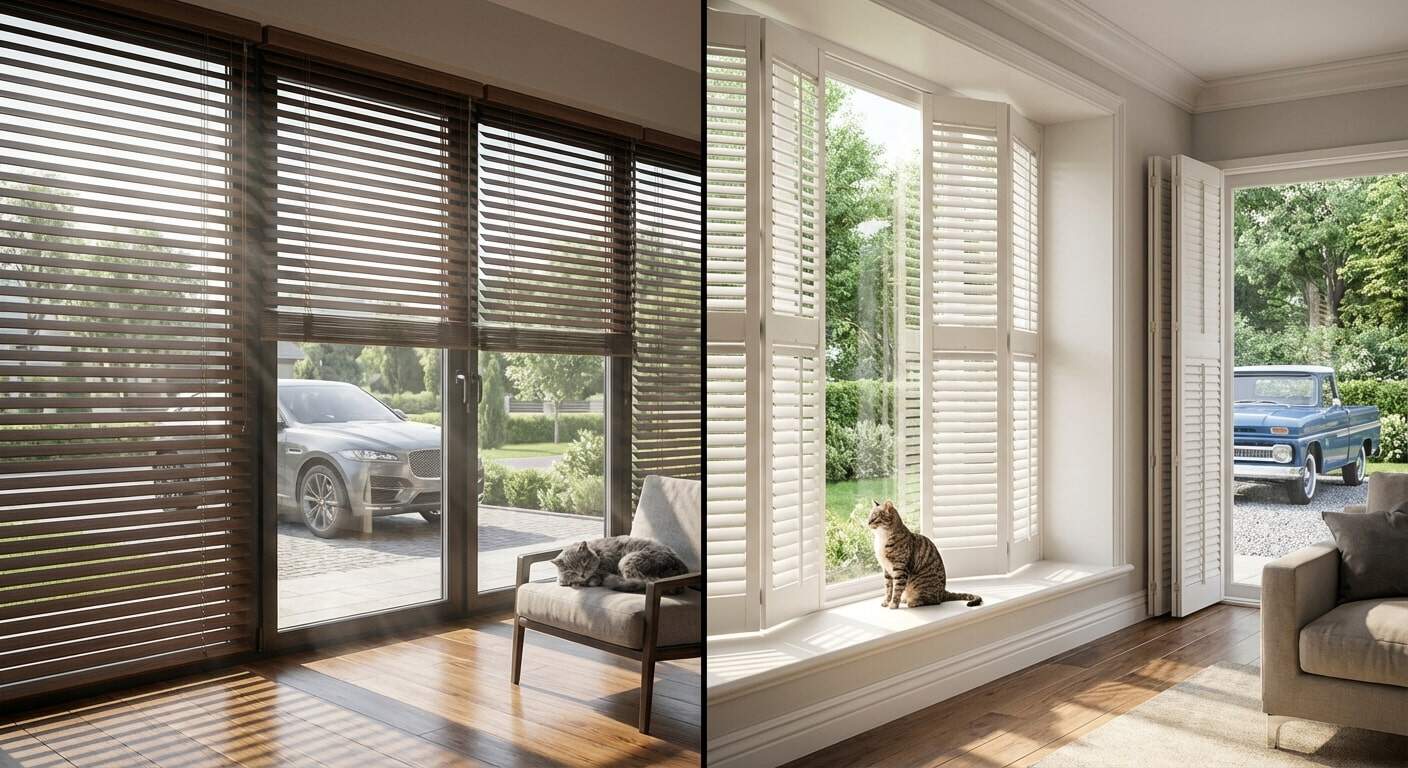
Bright living room showcasing large windows with shutters, a gray cat napping, and a classic truck outside.

Related Posts

January 5, 2026 | By DM Interiors & Design
Bright living room showcasing large windows with shutters, a gray cat napping, and a classic truck outside.

What are Blinds?

Blinds are a popular window covering known for their versatility in light and privacy control. They consist of horizontal or vertical slats, often made from materials like vinyl, aluminum, wood, or faux wood, which can be tilted or adjusted to manage the amount of light entering a room. Understanding the nuances of different blind types can help you make the best choice for your home, and exploring metal blinds is a great starting point for durability and modern aesthetics.

Blinds are a popular and versatile window treatment consisting of individual slats or vanes that can be tilted open and closed, or raised and lowered, to control light and privacy. Unlike solid shutters, blinds offer a degree of flexibility, allowing you to filter light rather than completely block it.

When considering blinds vs shutters, blinds are often chosen for their adaptability and wide range of styles, materials, and operating mechanisms. They serve as a practical and aesthetic solution for various interior design needs.

The functionality of blinds is rooted in their adjustable nature. Depending on the type, they can be manually operated with cords or wands, or even motorized for convenience. This allows homeowners to precisely manage the amount of sunlight entering a room and maintain desired levels of privacy. Explore modern innovations in shades and blinds to see the latest advancements.

Common features of blinds include:

  • Material Variety: Blinds come in diverse materials such as wood, faux wood, aluminum, vinyl, and fabric, each offering distinct aesthetic and functional properties.
  • Light Control: Slats or vanes can be tilted to direct light, providing anything from soft diffusion to near blackout conditions.
  • Privacy: Adjusting the slats allows for privacy while still letting some natural light into the space.
  • Style Options: From minimalist roller blinds to classic Venetian styles, there’s a blind to complement almost any decor.
  • Ease of Operation: Most blinds are simple to operate, with options for cordless designs, top-down/bottom-up features, and motorization.

Understanding these characteristics is key when evaluating blinds vs shutters for your home, as they highlight the core advantages and applications of blinds as a window covering solution.

Exploring the World of Shutters

Shutters represent a timeless and elegant window treatment option, often considered a premium choice in interior design. Unlike blinds vs shutters, shutters are typically custom-built to fit specific window dimensions, offering a more integrated and architectural feel to a room.

Their construction involves solid frames and adjustable louvers, providing superior control over light, privacy, and insulation. The inherent durability of shutters makes them a long-term investment for many homeowners. For a deeper dive into shutter materials, consider exploring composite shutters vs wood options.

Types of Shutters

There are several popular styles of shutters, each with distinct characteristics and aesthetic appeals. Choosing the right shutter style can complement your home’s decor, much like selecting the perfect colors, and our blog offers a guide to interior color palettes for a stunning home.

  • Plantation Shutters: Characterized by wide louvers, these are a classic choice known for their sophisticated look and excellent light control. They are very common in residential settings due to their versatility.
  • Café Style Shutters: These cover only the bottom half of the window, allowing ample natural light to enter while maintaining privacy in the lower portion. They are ideal for kitchens or street-facing rooms.
  • Full Height Shutters: Covering the entire window, full height shutters offer maximum privacy and light blockage. They can be designed with a mid-rail, allowing independent operation of the top and bottom louvers.
  • Tier-on-Tier Shutters: This style features two separate sets of shutters, one above the other, that operate independently. This allows for versatile light and privacy control, similar to a double-hung window.

Aesthetic Appeal and Functionality

Shutters add a layer of architectural detail and sophistication to any space. Their robust construction and clean lines contribute to a polished and finished look. Beyond aesthetics, their functionality is a significant advantage when comparing blinds vs shutters, and you can explore the differences between composite shutters versus wood shutters to make an informed decision about your home.

Material and Durability in Blinds vs Shutters

When comparing blinds vs shutters, one of the most significant differences lies in their construction materials and the resulting durability. Shutters are typically made from solid wood or robust composite materials, offering a substantial feel and long-lasting performance. This contrasts with many types of blinds, which can be made from thinner materials like vinyl or aluminum. Understanding the nuances between composite shutters vs wood can help you choose the best option for your needs.

The choice between blinds vs shutters often begins with an assessment of their core materials and inherent durability. Blinds are typically constructed from a range of materials, including vinyl, aluminum, wood, and fabric. Each material offers different levels of resilience and aesthetic appeal; for more information on custom window treatments, explore our offerings.

  • Vinyl and Aluminum Blinds: These options are generally more budget-friendly and offer good resistance to moisture, making them suitable for bathrooms and kitchens. However, they may be less durable over time compared to other materials.
  • Wood and Faux Wood Blinds: Wood blinds provide a classic, warm look but can be susceptible to warping in high-humidity environments. Faux wood offers a similar aesthetic with enhanced moisture resistance and durability.
  • Fabric Blinds: These come in various styles, such as roller, Roman, or cellular, offering diverse textures and light-filtering capabilities. Their durability depends heavily on the fabric type and weave.

Shutters, on the other hand, are commonly made from solid wood, composite wood, or PVC. Their robust construction contributes to superior durability and longevity, often lasting for decades with proper care. For a deeper dive into shutter materials, explore our comparison of composite shutters vs wood. You can also find inspiration for your home’s aesthetic by checking out our guide to interior design trends and tips.

  • Solid Wood Shutters: Known for their timeless beauty and structural integrity, solid wood shutters are highly durable and can be refinished multiple times. They are an investment that adds significant value to a home.
  • Composite Wood Shutters: These are engineered from a blend of wood fibers and synthetic materials, offering excellent stability and resistance to warping. They are a durable alternative to solid wood, often at a lower price point.
  • PVC Shutters: Ideal for high-moisture areas, PVC shutters are completely waterproof and highly resistant to fading, cracking, and peeling, ensuring exceptional durability in challenging environments.

Light Control and Privacy

The ability to control light and ensure privacy is a fundamental consideration when comparing blinds vs shutters. Both options offer varying degrees of control, but their mechanisms and effectiveness differ significantly. For a deeper dive into material choices, explore our comparison of composite shutters vs wood to find the best fit for your needs.

  • Blinds: Most blinds feature adjustable slats or vanes that can be tilted to direct light or provide privacy. They can also be raised completely to allow full natural light. However, small gaps between slats can sometimes allow glimpses, compromising complete privacy.
  • Shutters: Shutters offer excellent light control and privacy due to their solid construction and precise louver adjustments. The louvers can be tilted to fine-tune light entry, or the panels can be fully closed for maximum privacy and light blockage. Their snug fit within the window frame also minimizes light leakage.

For areas where complete darkness or maximum privacy is paramount, shutters often provide a more effective solution. Blinds, while versatile, may not offer the same level of light sealing or visual obstruction. For a deeper dive into shutter options, consider exploring composite shutters vs wood. You can also find inspiration for dressing your windows throughout the year by checking out our guide to seasonal window decor trends for more.

Maintenance and Cleaning

Ease of maintenance is another practical difference when evaluating blinds vs shutters. Both require regular cleaning, but their designs influence the effort involved.

  • Blinds: The cleaning process for blinds can vary based on material. Slatted blinds (like Venetian or vertical) often accumulate dust on individual slats, requiring regular dusting or wiping. Fabric blinds may need spot cleaning or professional cleaning, which can be more involved. The numerous cords and mechanisms can also be tricky to clean thoroughly.
  • Shutters: Shutters are generally easier to clean due to their larger, solid surfaces. A simple wipe-down with a damp cloth or a quick dusting is usually sufficient to keep them looking pristine. Their robust construction means fewer intricate parts to navigate during cleaning, making them a more convenient option for busy households.

The solid, flat surfaces of shutters tend to collect less dust than the horizontal slats of many blinds, contributing to their lower maintenance profile over time. This makes the choice between blinds vs shutters simpler for those prioritizing easy upkeep, especially when considering options like composite shutters vs wood, or comparing them to other window treatments like honeycomb vs pleated shades.

Cost Considerations: Blinds Vs Shutters

When evaluating blinds vs shutters, the financial outlay is often a primary concern for homeowners. The initial price tag can vary significantly between these two popular window treatments, influencing budget allocation and long-term investment decisions.

Generally, blinds are more budget-friendly upfront, offering a wider range of price points depending on material, style, and customization. Shutters, conversely, typically represent a higher initial investment due to their robust construction and custom-fit nature.

However, the conversation around cost extends beyond the initial purchase to include installation, durability, and potential impact on home value. Understanding these factors helps homeowners make an informed choice that aligns with their financial goals and aesthetic preferences.

FeatureBlindsShutters
Initial CostLower to moderateModerate to higher
Installation ComplexityGenerally simpler, often DIY-friendlyTypically professional, precise fitting required
Longevity & DurabilityVaries by material; typically 5-10 yearsExcellent; 15-25+ years with proper care
Energy EfficiencyModerate, depends on material and fitHigh, acts as an insulating barrier
Impact on Home ValueMinimal to moderateSignificant, considered a permanent fixture
MaintenanceRegular dusting, occasional deeper cleaningSimple wiping, occasional deep cleaning

While blinds might seem more appealing due to their lower entry cost, considering the long-term benefits of shutters, such as their durability and insulation properties, can reveal a different perspective on their overall value. The choice between blinds vs shutters often comes down to balancing immediate expenditure with enduring benefits. For instance, exploring the differences between composite shutters vs wood can further clarify material choices, and understanding their performance in window treatments for extreme climates can highlight their protective qualities.

Ultimately, the “best investment” depends on individual priorities, whether it’s immediate affordability or a long-term enhancement to your home’s comfort and resale value.

Installation and Maintenance: A Practical Look

Understanding the installation and ongoing maintenance for both blinds vs shutters is crucial for any homeowner. This section provides practical guidance to empower you with the knowledge needed for proper upkeep, ensuring your window treatments remain beautiful and functional for years to come. If you’re considering a complete home refresh, working with custom interior designers can help integrate these elements seamlessly into your overall aesthetic.

Whether you plan for professional installation or consider DIY efforts, knowing what to expect can significantly influence your long-term satisfaction.

Blinds vs Shutters: Installation Insights

The installation process for blinds vs shutters can vary significantly, impacting both complexity and cost. Blinds typically offer a simpler installation, often suitable for experienced DIY enthusiasts. They are generally lighter and come with straightforward mounting hardware, allowing for inside or outside frame installation.

Shutters, conversely, require precise measurements and a more involved installation process. Their custom fit demands careful alignment and secure fastening to the window frame to ensure proper operation and aesthetic appeal. Professional installation is highly recommended for shutters to guarantee a perfect fit and long-term durability, especially when considering custom window treatments.

Maintaining Blinds: Tips for Longevity

Proper cleaning and care are essential for extending the life of your blinds. Regular dusting with a microfiber cloth or a vacuum cleaner attachment can prevent dust buildup. For tougher stains, a damp cloth with mild soap can be used, but always test in an inconspicuous area first. For more detailed information on specific types of blinds and their care, consult our guide to metal blinds and other options, or explore how to transform your home’s style with wallpaper.

Proper maintenance helps extend the life and appearance of your blinds. Regular cleaning prevents dust and grime buildup, preserving their functionality and aesthetic.

  1. Regular Dusting: Use a feather duster, microfiber cloth, or vacuum cleaner with a brush attachment to gently remove dust from slats or fabric.
  2. Spot Cleaning: For tougher spots, use a mild soap solution and a damp cloth. Test in an inconspicuous area first to prevent discoloration.
  3. Deep Cleaning (for some materials): Vinyl and aluminum blinds can be wiped down with a damp cloth and mild detergent. Fabric blinds may require professional cleaning or specific spot treatments as per manufacturer guidelines.
  4. Cord and Mechanism Check: Periodically inspect cords and operating mechanisms for wear and tear. Address any issues promptly to maintain smooth functionality.
  5. Avoid Harsh Chemicals: Never use abrasive cleaners or strong chemicals, as these can damage the material and finish of your blinds.

Shutters: Care and Upkeep Essentials

Shutters, known for their durability and longevity, also benefit from consistent care to maintain their pristine condition. Their robust construction means they often require less frequent deep cleaning compared to blinds, but routine maintenance is still key. Understanding the differences between materials can help you choose the best option for your home; explore our guide on composite shutters vs wood to make an informed decision.

  1. Dusting: Wipe down shutter panels and louvers with a soft, dry cloth or duster to remove surface dust.
  2. Cleaning Stains: For wooden shutters, use a wood-friendly cleaner or a damp cloth with mild soap, drying immediately. For vinyl or composite shutters, a damp cloth with mild detergent is usually sufficient.
  3. Hinge and Hardware Inspection: Periodically check hinges and other hardware for any looseness or signs of wear. Tighten screws as needed to ensure smooth operation.
  4. Avoid Excess Moisture: Especially for wooden shutters, avoid prolonged exposure to moisture, which can cause warping or damage.
  5. Professional Refinishing: Over time, wooden shutters might benefit from professional refinishing to restore their luster and protect the wood.

Choosing between blinds vs shutters involves weighing factors like installation, ongoing care, and aesthetic preferences. Thoughtful consideration of these elements ensures your window treatments not only look great but also perform effectively for years.

Choosing the Right Window Treatment for Your Home

When deciding on window treatments, understanding the differences between materials can help you make an informed choice. For instance, exploring the pros and cons of composite shutters vs wood can guide you toward the best option for your home’s specific needs and style.

Selecting the ideal window treatment requires careful consideration of your home’s unique needs, aesthetic preferences, and functional requirements. When comparing blinds vs shutters, homeowners often prioritize specific benefits based on the room and their lifestyle. After installing numerous systems, our team has found that clients frequently focus on light control, privacy, and durability.

Understanding the distinct characteristics of blinds vs shutters is crucial for making an informed decision. Blinds offer versatility and a wide range of styles, while shutters provide a more permanent and robust solution. Each option brings its own set of advantages to different areas of your home. For those interested in the latest advancements, exploring modern innovations in shades and blinds can offer smart home solutions.

Consider the primary purpose of the window treatment in each room. For instance, bedrooms might prioritize maximum light blockage and privacy, whereas living rooms could benefit from flexible light filtration and aesthetic appeal. The choice between blinds vs shutters can significantly impact the ambiance and functionality of your living spaces.

When evaluating which option is best, ask yourself the following questions:

  • What level of privacy is required for this room?
  • How much natural light do I want to control?
  • What is my desired aesthetic and how will it complement my existing decor?
  • Are there any specific insulation or energy efficiency needs for this window?
  • What is my budget for window treatments, considering both initial cost and long-term value?

By carefully assessing these factors, you can narrow down your options and confidently choose between blinds vs shutters to enhance your home’s comfort and style.

Choosing between blinds vs shutters involves balancing aesthetic preferences, functional needs, and budget to find the perfect window treatment solution for your home.

Benefits of Professional Window Treatment Consultation

Seeking professional consultation for window treatments offers numerous advantages, particularly when navigating the choice between blinds vs shutters. Expert advice can significantly simplify the decision-making process, ensuring optimal results that align with your home’s aesthetic and functional needs.

Our team can provide personalized recommendations, considering factors such as your home’s architecture, natural light exposure, and privacy requirements. This tailored approach helps you avoid common pitfalls and makes sure your investment is well-placed. For instance, understanding the differences between https://dminteriorsanddesign.com/blog/composite-shutters-vs-wood/ can guide your material selection, and learning about https://dminteriorsanddesign.com/blog/reasons-for-bay-window-treatments/ can help with unique architectural features.

  • Expert Guidance. Professionals possess in-depth knowledge of various window treatment options, including the nuances of blinds vs shutters, helping you understand their specific benefits and limitations.
  • Custom Solutions. They can create bespoke designs that perfectly fit your windows and complement your interior decor, ensuring a cohesive and polished look.
  • Accurate Measurement and Installation. Precision is key in window treatments. Professionals ensure accurate measurements and flawless installation, preventing issues that could arise from DIY attempts.
  • Access to Quality Materials. Consultants often have access to a wider range of high-quality materials and innovative products that may not be readily available to the public.
  • Long-Term Value. By investing in professional advice and installation, you ensure durability and longevity for your window treatments, maximizing their value over time.

Professional window treatment consultation is invaluable for making informed decisions about whether blinds or shutters are the right choice for your home. For a deeper dive into material differences, explore our comparison of composite shutters vs wood.

Styling Your Space: Blinds vs Shutters in Different Rooms

When deciding between blinds vs shutters, considering the specific function and aesthetic of each room is crucial. Different spaces within your home have unique needs regarding light control, privacy, durability, and overall design. For instance, if you’re looking for 5 ways to give your living room a fun refresh, you might consider how different window treatments can contribute to that updated look.

Understanding how each window treatment performs in various environments can help you make a choice that enhances both the beauty and practicality of your living areas.

Living Rooms and Dining Areas

Living rooms and dining areas often serve as focal points for entertaining and relaxation, making their window treatments a key element in setting the mood. For these spaces, the choice between blinds vs shutters can significantly impact the ambiance, and understanding the benefits of custom window coverings can help you make the best decision.

  • Blinds: Offer versatility in light management, allowing you to easily adjust the slats to filter natural light or provide privacy. They come in a wide array of materials and colors, making it simple to match existing decor or introduce a pop of color.
  • Shutters: Provide a more permanent and elegant solution, adding architectural interest and a sense of refined style. Their robust construction offers excellent light control and privacy, and they can be customized to complement various interior design themes.

Bedrooms and Nurseries

For bedrooms and nurseries, prioritizing a restful environment is key. Window treatments here should effectively block out light to promote sleep and offer a sense of security. Consider options that provide excellent insulation to help maintain a comfortable room temperature throughout the night, and explore the benefits of cellular shades vs roman shades for their energy-saving qualities.

In bedrooms and nurseries, the primary concerns are often privacy, light blockage, and noise reduction to ensure a restful environment. Both blinds vs shutters can address these needs, but with different levels of effectiveness.

  • Blinds: Many types of blinds, particularly blackout or room-darkening varieties, are effective at blocking light, which is essential for quality sleep. They are also available with cordless options, enhancing safety in children’s rooms.
  • Shutters: Excel in providing superior light blockage and privacy due to their solid construction and snug fit within the window frame. They also offer an added layer of insulation, contributing to a quieter and more temperature-controlled room.

Kitchens and Bathrooms

Kitchens and bathrooms present unique challenges due to high humidity, temperature fluctuations, and the need for easy cleaning. The durability and moisture resistance of your chosen window treatment are paramount in these areas when considering blinds vs shutters. For example, you might explore composite shutters vs wood to find the best fit for these demanding environments, and to understand how to control light effectively, consider exploring options for how to control light with Hunter Douglas Duolite systems.

  • Blinds: Faux wood or vinyl blinds are excellent choices for these rooms as they are highly resistant to moisture and easy to wipe clean. They provide the necessary light control and privacy without succumbing to warping or mildew.
  • Shutters: Similarly, composite or PVC shutters are ideal for humid environments. They offer a sophisticated look while being incredibly durable and easy to maintain, standing up well to splashes and steam without damage.

Making the Final Decision: Blinds Vs Shutters

Deciding between blinds vs shutters involves weighing various factors specific to your home and lifestyle. This final decision should align with your aesthetic preferences, functional needs, and budget. By carefully considering key questions, you can confidently select the window treatments that will best enhance your living spaces for years to come.

To help you make an informed choice, consider the following questions. These points will guide you in evaluating which option, blinds vs shutters, is the most suitable investment for your windows. For instance, understanding the differences between composite and wood shutters can be a key factor in your decision, so explore composite shutters vs wood options.

  • What is your primary goal for window treatments? Are you prioritizing light control, privacy, insulation, or purely aesthetics?
  • What is your budget? Blinds typically offer a more budget-friendly initial cost, while shutters represent a more significant, long-term investment.
  • How important is durability and longevity to you? Shutters are known for their robust construction and can last for decades, whereas blinds may require replacement sooner depending on material and usage.
  • What level of maintenance are you comfortable with? Shutters are generally easier to clean and maintain compared to many types of blinds, which can accumulate dust in intricate mechanisms.
  • What style or aesthetic are you aiming for in your home? Consider if a more traditional, permanent look (shutters) or a versatile, adaptable appearance (blinds) better suits your interior design.
  • Do you need superior insulation properties? Shutters often provide better insulation due to their solid construction and snug fit within the window frame.
  • How critical is precise light control? Both options offer light control, but shutters provide a more solid barrier when closed, while blinds offer more flexibility in angling slats for diffused light.

Ultimately, the choice between blinds vs shutters depends on your unique needs and preferences for aesthetics, function, and long-term value. Carefully evaluating these factors will help you select the ideal window treatment solution for your home. For those seeking advanced functionality, consider exploring the benefits of automated window treatments for enhanced convenience.

Frequently Asked Questions About Window Treatments

Navigating the options between blinds vs shutters can lead to many questions. This section addresses common inquiries homeowners have, providing clear and practical answers to help demystify the choices and empower you with essential information for selecting the perfect window treatments. We also offer a special thank you to our partners at Hamilton Mill for more.

Understanding these frequently asked questions will help you make an informed decision about the best investment for your windows.

Are Shutters Truly More Durable Than Blinds?

Yes, shutters generally offer superior durability compared to blinds. This is primarily due to their robust construction and the materials typically used. For instance, when comparing composite shutters vs wood, both offer excellent longevity, but the specific application and environment can influence which material is best suited for your needs. For more information on design choices, consider our Complete Interior Design Consult for more.

  • Material and Construction: Shutters are often made from solid wood, composite, or high-quality PVC, which are inherently more resilient than the lighter materials used for most blinds (vinyl, aluminum, or fabric). Their frame-mounted installation also contributes to their stability.
  • Lifespan: A well-maintained set of shutters can last for decades, often becoming a permanent fixture of a home. While high-quality blinds can be durable, they typically have a shorter lifespan than shutters when comparing blinds vs shutters.
  • Maintenance: Shutters are easier to clean and less prone to tangling or bending, common issues that can affect the longevity of blinds.

Which Option Provides Better Light Control and Privacy?

Both blinds and shutters offer excellent control over light and privacy, but they achieve it in different ways and to varying degrees when comparing blinds vs shutters. For instance, you might explore different shutter styles to see how they can enhance your home’s ambiance and functionality.

  • Shutters: These provide exceptional light control. Their solid louvers can be precisely angled to direct light, and when closed, they offer near-total darkness and privacy. The solid construction also helps block outside noise.
  • Blinds: Depending on the type, blinds can offer good light control. Horizontal blinds with adjustable slats allow you to tilt them for varying light diffusion and privacy. Vertical blinds are excellent for wide windows and sliding doors, offering good directional light control. However, gaps between slats or vanes might allow for some light leakage and reduced privacy compared to fully closed shutters.

Do Blinds or Shutters Offer Better Insulation?

When considering insulation, shutters typically outperform blinds due to their construction and fit. This is an important factor when weighing blinds vs shutters for energy efficiency. For more information on shutter materials, explore our guide on composite shutters vs wood.

  • Shutters: The solid panels and snug fit within the window frame create an effective barrier against heat transfer. This air pocket between the window and the shutter acts as an insulator, helping to keep rooms warmer in winter and cooler in summer.
  • Blinds: While some blinds, particularly cellular or honeycomb blinds, are designed with insulating properties, most standard blinds offer less thermal resistance than shutters. Their thinner materials and potential for gaps around the edges reduce their overall insulating capability.

Conclusion: Investing in the Right Window Treatments

In the comprehensive debate of blinds vs shutters, it’s clear that both options offer distinct advantages for enhancing your home’s aesthetics and functionality. The ideal choice ultimately depends on your specific needs, budget, and design preferences.

Shutters provide unparalleled durability, superior insulation, and a classic, permanent aesthetic that can significantly boost your home’s value. They offer excellent light control and privacy, making them a long-term investment. For a deeper dive into shutter materials, consider exploring the differences between composite shutters vs wood.

Blinds, on the other hand, offer greater versatility in style and material, often at a more accessible price point. They provide flexible light filtering and are easier to replace or update, allowing for more frequent changes in your interior decor. When deciding between blinds vs shutters, consider factors such as maintenance requirements, desired level of light control, and overall impact on your home’s style. For a deeper dive into shutter materials, explore our comparison of composite shutters vs wood.

Making an informed decision about your window treatments is crucial for creating a comfortable and stylish living environment. By carefully weighing the characteristics of blinds vs shutters, you can select the option that best complements your home and lifestyle, whether for residential or commercial spaces, as detailed in our commercial interior design services.

Choosing between blinds and shutters involves considering factors like durability, light control, and aesthetic appeal to find the perfect fit for your home.

Ready to get started? Call DM Interiors & Design

Showroom - Flagship Store

By Appointment Only

Transformative Design Can Be Yours

Connect With Our Team Today

Have questions? Ready to get started? Reach out to the DM Interiors & Design team below or stop by our Marietta showroom today.

"*" indicates required fields

Name*

What Sets Us Apart

Elegant Solutions. Exceptional Finds.

Meet With An Expert Designer

Experience a personalized approach to achieving your dream space with our in-house designer, and discover the perfect design elements for your space.

No Project is Too Big or Small

Whether you’re revamping a single room or undertaking a full-home makeover, we're ready to help bring your vision to life.

Licensed, Insured, Vetted Pros

Home projects are stressful enough; you can rest assured that our team is licensed, insured, and thoroughly vetted for your peace of mind.

Financing Options Available

Our flexible financing options support you however you'd like to pay, making it easier than ever to achieve your dream interiors.