
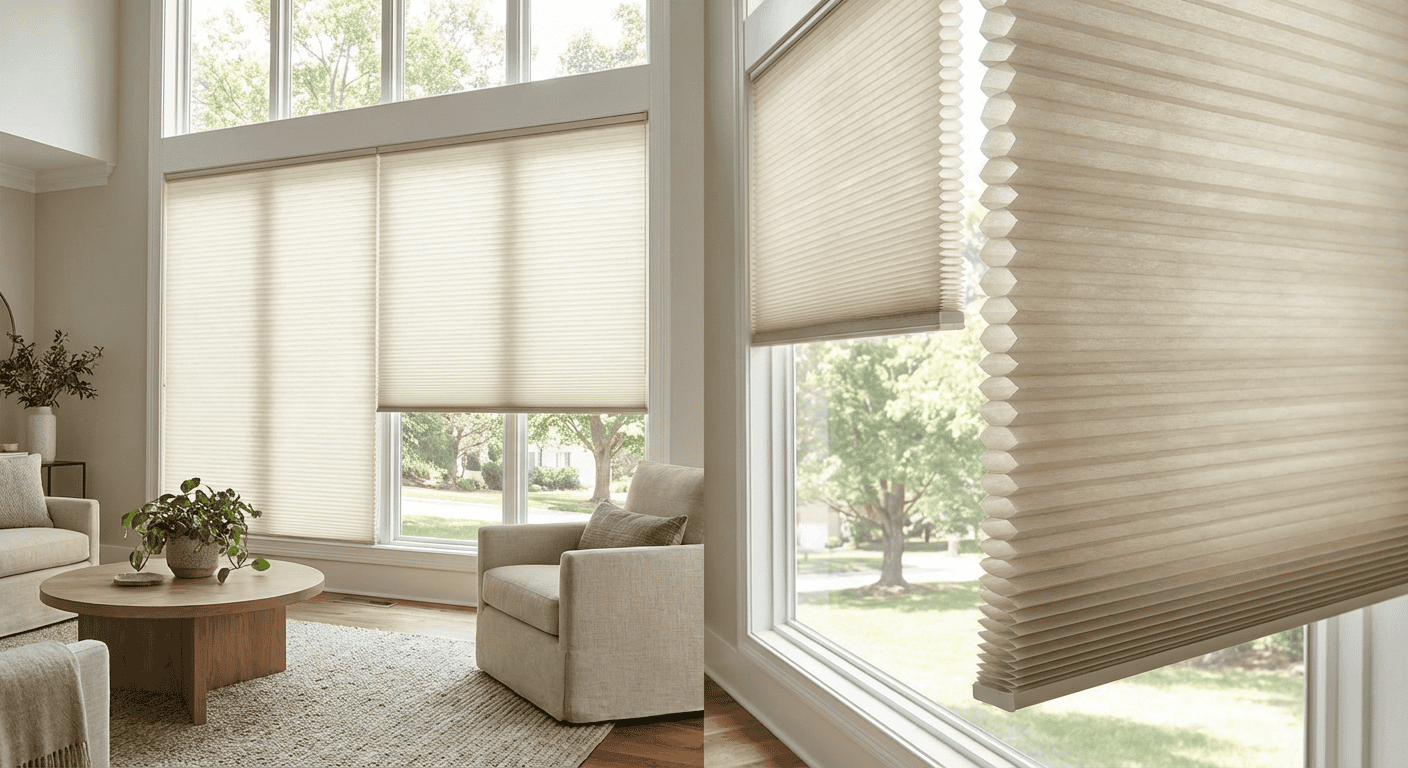
When comparing honeycomb vs pleated shades, the primary difference lies in structure: Honeycomb shades trap air in insulating pockets to reduce energy loss, while pleated shades offer a single-layer fabric fold focused on texture and light filtering. High-performance cellular shades offer year-round temperature control and noise dampening, outperforming single-layer pleated treatments.. The team at DM Interiors can guide you through tailored fabrics and opacities to determine which treatment best complements your home’s architecture and budget.
Overview
Choosing between cellular and single-fold window treatments requires balancing thermal insulation, room exposure, and upfront material costs. Homeowners evaluating honeycomb vs pleated shades must weigh whether trapped air pockets justify higher hardware investments over tailored fabric folds. The sections ahead examine build profiles, seasonal efficiency, and daily maintenance considerations across various living spaces. This analysis also includes a labeled real-world hypothetical featuring a homeowner scenario under specific room exposures with a site-level recommendation.
- Key Distinctions: Compare single-layer fabric construction against multi-cell barriers by reviewing structural shade differences across standard profiles.
- Thermal Efficiency: Review how air barriers reduce conductive heat transfer by checking insulating performance metrics for exterior glass.
- Light Control: Evaluate privacy backings and room-darkening liners through different opacity and privacy levels suited for bedrooms.
- Maintenance Needs: Keep fabrics clear of airborne dust using simple cleaning and care techniques built for delicate pleats.
- Design Choices: Match pleat depths and rich textile patterns by assessing fabric textures and colors for modern interiors.
- Selection Strategy: Match individual window dimensions and budget limits through practical shade selection criteria before purchasing.
Structural Differences Between Honeycomb and Pleated Window Shades
Hunter Douglas cellular shades add an insulating barrier to window glass through engineered internal chambers.. These hollow geometric cells capture outdoor heat and winter drafts before thermal transfer enters the living space. By contrast, pleated shades utilize a single tailored textile layer pressed into repeating accordion-style creases. While both options stack tightly at the top of the window frame, their underlying architecture creates distinct functional differences in thermal control and profile depth.
Homeowners evaluating custom window treatments often weigh structural performance against upfront expense. Pleated designs offer sharp horizontal lines and dependable daylight diffusion at an accessible investment level, though the single-layer weave allows conductive heat exchange. Honeycomb shades have multiple bonded fabric layers that provide sound dampening and measurable energy reduction. DM Interiors pairs specific room exposures with these construction types to address heat gain, glare, and room layout goals.
| Design Feature | Honeycomb Shades | Pleated Shades |
|---|---|---|
| Core Construction | Dual or triple fabric layers forming enclosed cells | Single continuous fabric panel pressed into folds |
| Thermal Insulation | Substantial heat retention via sealed air barriers | Minimal resistance to seasonal temperature shifts |
| Side Profile | Visible hexagonal or double-cell profile | Flat zigzag silhouette |
| Acoustic Absorption | Traps interior echo and dampens exterior noise | Standard fabric diffusion without sound dampening |
| Primary Application | Sun-facing windows, bedrooms, and extreme climates | Low-exposure windows, dining spaces, and guest rooms |
Thermal Performance and Insulation Comparison
Windows account for substantial seasonal heat loss and solar gain, making material construction a major factor in interior comfort. Installing Cellular Shades creates a stationary barrier of trapped air directly against the glass pane. This pocketed architecture stops convective currents from cycling warm air toward cold window panes in winter or transferring scorching outdoor temperatures indoors during summer afternoons.
Standard pleated treatments consist of a crisp, continuous sheet of accordion-creased textile. While a single fabric shield cuts down radiant sun exposure compared to bare glass, the lack of an internal dead-air cavity limits its barrier capacity. When homeowners want true climate stabilization across intense Georgia seasons, choosing proven Energy Efficient blinds helps curb HVAC runtimes and lower monthly utility demands.
| Performance Attribute | Cellular Honeycomb Design | Pleated Fabric Design |
|---|---|---|
| Core Build | Multi-sided cells creating dead-air pockets | Single-layer folded textile sheet |
| Insulating Capability | High R-value barrier minimizing thermal transfer | Moderate screening without internal pocketing |
| Draft Mitigation | Blocks air movement along the window opening | Allows partial convective air circulation |
At DM Interiors, we suggest matching shade construction directly to room exposure. Spaces with expansive west-facing glass or drafts benefit most from honeycomb barriers, whereas pleated styles serve rooms where basic shade and tailored texture take precedence over heavy thermal resistance.
Daylight Management and Room Seclusion
Window coverings dictate how natural sunlight enters living spaces while establishing sightline boundaries from the outdoors. Selecting Cellular Shades gives homeowners multi-tiered control through top-down/bottom-up hardware configurations and true opaque fabric builds. This architectural setup lets daylight wash across the ceiling while screening the lower window pane against street-level views.
Single-layer pleated shades function differently across daily routines. Because pleated shades rely on one continuous textile sheet without internal air pockets, their daylight dampening relies strictly on weave density. They soften harsh glare effectively, yet standard pleated models lack the pinpoint isolation capabilities that cellular pockets provide.
For spaces requiring total darkness, such as ground-floor primary suites, pairing blackout fabrics with Hunter Douglas LightLock® systems seals off side-channel light gaps completely. In rooms where solid louvers might serve better than soft window treatments, evaluating Shutters offers another distinct approach to managing intense direct sun and outdoor exposure.
| Performance Attribute | Honeycomb Window Shades | Pleated Fabric Shades |
|---|---|---|
| Fabric Density Options | Sheer, semi-opaque, and total blackout textiles | Translucent light-filtering through room-darkening weights |
| Edge Sealing Capabilities | Compatible with light-blocking side channels | Standard fabric edge gaps remain visible |
| Sightline Management | Dual-direction lowering preserves sky views and privacy | Single-direction stacking offers baseline coverage |
Long-Term Wear and Care Requirements
Geometric cellular architecture gives honeycomb shades a structural advantage over time. These enclosed pockets bounce back after repeated movement, resisting crushing and holding crisp horizontal lines. Pleated styles depend on an unsupported single sheet of textile, which leaves sharp folds vulnerable to flattening or edge fraying across years of daily lifting. Fabric grade determines product lifespan across both styles, making fiber selection critical.
Custom window treatments hold their value when matched to specific room conditions. Intense southern sunlight degrades delicate weaves, while airborne moisture breaks down textile stiffness. High-humidity areas like bathrooms and laundry spaces present constant threats to woven fabrics. In wet environments, Hunter Douglas vinyl shutters resist water damage and retain structural integrity where paper-thin folds would buckle or spot.
Routine Cleaning and Maintenance Practices
Routine dusting maintains shade appearance without stressing fragile textiles. Both styles respond well to gentle maintenance techniques:
- Run a vacuum on low suction with a soft brush attachment horizontally across the fabric to lift surface particles.
- Direct a hairdryer set to cool air straight through honeycomb cells to blow out trapped insects or hidden lint.
- Blot light marks with a clean microfiber cloth dampened in lukewarm water and mild dish detergent, avoiding vigorous scrubbing that damages pleat memory.
Specialized factory finishes and anti-static coatings alter cleaning protocols, so always review manufacturer instructions before applying liquids. Homeowners wanting zero fabric upkeep often turn to solid alternatives. Installing durable composite shutters offers a quick-wipe surface that eliminates the careful blotting and dusting cycles required by pleated fabrics.
Visual Style and Fabric Comparison
Honeycomb shades create a uniform, architectural presentation across window glass because their internal pockets hide operational lift cords. Fabric pleats remain evenly spaced regardless of window height, presenting a smooth forward face paired with side-profile geometric cells. Homeowners can select single, double, or triple cell dimensions alongside sheer, semi-opaque, or room-darkening fabric densities to set room tone.
Crisp horizontal creases give pleated alternatives an angular, accordion profile that suits classic moldings and formal furnishings. Unlike double-layer pocket structures, pleated textiles present a single sheet of tailored material where visible route holes accommodate cord guide lines. Tailored fabric folds introduce pronounced surface shadowing that pairs naturally with textured wall paints, millwork, and supplementary drapery panels.
Coordinating custom window dressings with adjacent finishes ensures balanced lighting and architectural unity throughout each living space. When planning living room interior design projects, DM Interiors guides homeowners through fabric swatches to match millwork profiles, trim colors, and room dimensions.
| Visual Attribute | Honeycomb Shades | Pleated Shades |
|---|---|---|
| Front Profile | Smooth, continuous textile plane with concealed cords | Sharp, crisp accordion folds with visible lift cords |
| Side Profile | Geometric cell chambers forming hexagonal pockets | Single layer of creased fabric folding flat |
| Design Pairing | Contemporary spaces, minimalism, mid-century layouts | Traditional rooms, formal dining areas, heritage homes |
| Fabric Opacities | Sheer, semi-opaque, light-filtering, room-darkening | Translucent, semi-opaque, patterned, woven |
How to Match Shades to Each Room
Evaluating your thermal insulation demands and daylight preferences determines whether cellular or pleated fabrics deliver the strongest daily performance. While comparing different shade types reveals an array of textures, focusing on heat transfer and glare reduction clarifies which design fits each space.
For homeowners aiming to curb monthly utility bills, honeycomb shades serve as dependable thermal barriers by capturing interior air inside stationary cells. Conversely, spaces that prioritize crisp geometry without requiring heavy thermal resistance benefit from the crisp profile of single-layer pleated treatments at a budget-friendly price point.
| Priority | Recommended Shade | Key Performance Factor |
|---|---|---|
| Thermal Efficiency | Honeycomb Shades | Enclosed cell structure traps air against window panes to block seasonal drafts. |
| Minimalist Profiles | Pleated Shades | Single-layer textile creates clean, uniform horizontal folds at an economical price. |
| Gentle Daylight Diffusion | Both Styles | Semi-opaque woven textiles soften incoming daylight without casting harsh room shadows. |
| Targeted Privacy | Top-Down/Bottom-Up Honeycomb | Adjustable rails block sightlines from passersby while allowing daylight through the upper sash. |
| Wide Sliders and Expansive Glass | Vertical Honeycomb Shades | Side-to-side track systems insulate broad glass panes while operating smoothly over sliding doors. |
Incorporating custom treatments into a complete living room interior design plan balances natural light diffusion with polished decorative finishes. For personal suites and humid zones, dedicated bathroom interior design layouts often depend on top-down honeycomb shades to secure dependable privacy while letting daylight filter through overhead.
Technical Review & Local Standards
Product specifications, mounting clearances, and technical details in this guide on Honeycomb Vs Pleated Shades Differences And Costs are verified against official manufacturer technical reference manuals and field-tested across residential installations in Marietta, Ellijay, Dacula, and surrounding metro Atlanta communities.
Recommendations for light control, privacy, and year-round comfort reflect real-world performance in Georgia homes across humid summers and varied residential installs. Written and reviewed by the certified window covering specialists at The DM Interiors Team. Last reviewed: November 2026.
FAQ
To help you navigate the choice between honeycomb vs pleated shades for your home, we have compiled quick answers to the most common questions regarding durability, light control, and maintenance in the table below.
| Question | Answer |
|---|---|
| Which option handles high humidity in Marietta bathrooms better? | Pleated shades made from synthetic polyester resist moisture absorption better in damp spaces. Standard honeycomb shades trap humid air inside their hollow cells, which can encourage mildew growth if the room lacks proper ventilation. If you need privacy in a humid Marietta bathroom, a moisture-resistant pleated fabric delivers better long-term durability. |
| Can pleated shades block out morning light as effectively as cellular fabrics? | True blackout performance requires honeycomb shades because their cellular structure hides the internal lift cords. Pleated shades require routed cord holes through the single-layer fabric, allowing small pinpricks of sunlight to seep through along the edges. For light-sensitive sleepers in Marietta, Georgia, double-cell honeycomb fabrics with blackout backing provide superior room darkening. |
| How do cleaning requirements compare between honeycomb vs pleated shades? | Pleated shades wipe down quickly with a microfiber cloth or soft duster because they consist of a single fabric face. Honeycomb shades collect dust, pet hair, and small insects inside their open side cells, requiring a vacuum with a brush attachment or compressed air to clear the pockets. Pleated fabrics take less time to maintain in homes with high pollen or multiple pets. |
| What should Marietta homeowners consider when choosing between single and double cells? | Double-cell honeycomb shades provide maximum thermal resistance against hot Georgia summers, lowering cooling costs on intense west-facing windows. Single-cell options cost less and offer a lighter, slimmer profile that fits shallower window frames common in older Marietta homes. If heat reduction is your main goal for sun-exposed rooms, choose double-cell construction. |