
Answer
Window treatments built for extreme climates can significantly lower heat gain. The Department of Energy states these treatments reduce heat by as much as 77 percent on west-facing windows and 65 percent on south-facing windows. DM Interiors supplies products such as cellular shades and thermal curtains, which help regulate indoor temperatures and decrease energy expenses. Choosing suitable window coverings helps reduce solar heat and boosts insulation all year.
Overview
This section details various window treatment choices that guard against severe weather, helping maintain consistent indoor temperatures. It shows how different materials and designs improve insulation and reduce energy costs throughout the year. The content also includes a hypothetical scenario about Eleanor, providing a specific business recommendation based on given facts.
- Choosing Treatments: Information on selecting treatments for harsh weather.
- Top Performing: Details on top performing window treatments.
- Real-World Example: How window treatments save energy.
- Vinyl Window Treatments: Options for vinyl for unpredictable weather.
- DM Interiors Solutions: Review DM Interiors climate-resistant solutions.
- Protecting Homes: More on thermal coverings for homes.
Choosing Treatments for Harsh Weather
Harsh weather conditions create specific challenges for maintaining indoor comfort and managing energy expenses, affecting both heating and cooling needs. Effective window treatments lower solar heat gain during warmer months and reduce heat loss when temperatures drop, directly influencing a building’s climate control. DM Interiors recognizes how varying sun exposure across different window orientations guides product selection.
Direct sun exposure, temperature shifts, and moisture threaten the lifespan and effectiveness of window coverings. For example, extended UV light exposure can cause materials to fade, warp, or become brittle over time. Significant temperature changes stress components, while high humidity can encourage mold or mildew growth, particularly in enclosed spaces.
| Climate Challenge | Impact on Window Treatments | Recommended Solutions |
|---|---|---|
| Intense Sunlight & UV Rays | Fading, material degradation, increased indoor heat. | Roller solar shades with high UV blockage, light-colored exteriors. |
| Temperature Extremes | Heat transfer, condensation, strain on components. | Insulating shades, such as cellular shades, that trap air. |
| High Humidity & Moisture | Mold, mildew, warping of natural materials. | Moisture-resistant materials like vinyl or composite shutters. |
| Wind & Storms | Damage to exterior window features, potential for interior drafts. | Durable shutters or securely mounted blinds. |
Top Performing Window Treatments
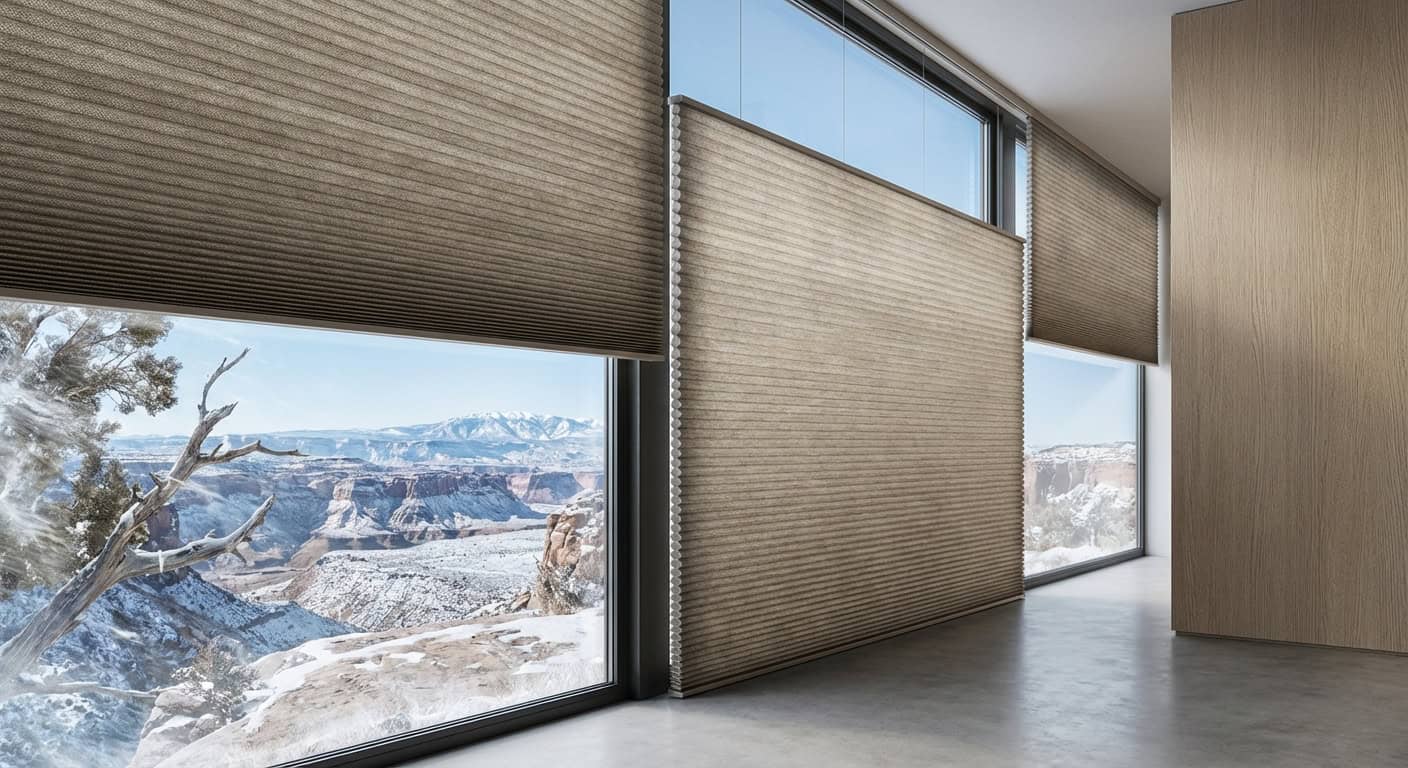
Triple cell shades offer better insulation than single or double cell designs. Their multi-layered, pleated fabric creates air pockets that trap air, slowing temperature changes and reducing heat transfer. DM Interiors suggests these shades for rooms receiving significant sun or areas prone to drafts.
Materials such as vinyl and specialized fabrics maintain indoor comfort in extreme temperatures. For example, Vinyl Shutters resist warping and cracking in heat and cold, a common problem with wood. Other options include roller solar shades, which block UV rays while allowing outdoor visibility.
Homeowners often seek window treatments that balance thermal efficiency and light control. Some products can block up to 99% of UV rays, protecting interiors from sun damage. When choosing, consider both specific climate challenges and your design preferences.
| Product Type | Key Performance Feature | Best for |
|---|---|---|
| Cellular Shades | Multi-cell construction traps air | Year-round insulation against heat and cold |
| Thermal Lined Drapes | Thick, insulated fabric layers | Blocking drafts and maximizing heat retention |
| Solar Shades | UV protection; glare reduction | Rooms with intense sun exposure and heat gain |
| Plantation Shutters | Adjustable louvers; durable materials | Light control and strong insulation |
| Exterior Shades | Blocks sun before it reaches glass | Significant heat reduction on exposed windows |
How Window Treatments Save Energy
Selecting appropriate window treatments helps control indoor temperatures, particularly in areas with harsh weather. Homeowners often find it challenging to balance appearance with practical function.
Eleanor needs to choose between cellular shades and thermal curtains to manage intense heat and cold in her home. She aims to lower energy bills and seeks the best insulation for her windows. Which option, cellular shades or thermal curtains, offers better protection for her home in an extreme climate?
Recommendation: Cellular Shades or Thermal Curtains
DM Interiors suggests either cellular shades or thermal curtains, based on individual requirements and window direction. Cellular shades provide excellent insulation, reducing heat gain and loss. Thermal curtains create a strong barrier against temperature extremes. For additional energy savings, homeowners may also consider shades with specialized insulating properties.
Vinyl Window Treatments for Unpredictable Weather
Vinyl shutters and blinds work well in climates with significant temperature shifts or high humidity. Their synthetic make-up resists moisture damage, warping, and cracking, which often affects wood products in harsh conditions. Homeowners frequently select vinyl shutters for their lasting quality in changing environments.
These window coverings also block UV radiation, guarding interiors from sun damage. Their construction limits expansion and contraction, preserving their appearance and function over time. This makes them a good choice for homes exposed to intense sunlight or extreme cold.
- Clean surfaces regularly with a soft cloth and mild soap to remove dust and grime.
- Inspect louvers and slats for any wear or damage, particularly after seasonal changes.
- Ensure mounting hardware remains secure, tightening screws as needed to keep stability.
- Check seals around the window frame to confirm proper insulation, stopping drafts.
| Pros | Cons |
|---|---|
| Resists moisture, humidity, and warping | May lack the natural look of wood |
| Offers good insulation against heat and cold | Color options might be fewer compared to other materials |
| Easy to clean and maintain | Less resistant to impact damage than some other materials |
| Durable against UV rays and fading | Can attract dust due to static electricity |
| Often more cost-effective than wood options | Not always suitable for very high-end design preferences |
DM Interiors Climate-Resistant Solutions
DM Interiors offers specific solutions for homes facing varied weather conditions. They assess factors such as sun exposure, humidity, and temperature shifts to suggest appropriate window coverings. Their product selection includes specialized items designed to resist harsh elements and maintain indoor comfort.
Choosing window coverings often involves weighing the initial cost against long-term performance. For example, some homeowners might select lower-priced options at first, only to discover these do not adequately block heat or retain warmth as seasons change. Investing in lasting solutions that suit the local climate prevents frequent replacements and helps lower energy bills. DM Interiors provides window coverings in this area.
| Product Type | Climate Benefit | Consideration |
|---|---|---|
| cellular shades | Excellent insulation against heat and cold. | May require precise measurement for an optimal thermal seal. |
| Roller solar shades | Reduces solar heat gain and glare. | Less effective for heat retention in colder months compared to cellular options. |
| Vinyl Shutters | Durable, moisture-resistant, and offers good insulation. | Can be heavier and may limit natural light when closed. |
Protecting Homes with Thermal Coverings
Thermal window coverings keep indoor temperatures stable, especially in very hot or cold climates. Beyond saving energy, these coverings also lessen outside noise and shield furnishings from UV light damage. Their layered construction forms insulation barriers that slow heat transfer through windows, making homes more comfortable throughout the year.
DM Interiors finds that many homeowners look for ways to manage rooms with too much sun or noticeable cold drafts. We suggest specific thermal designs to solve these problems, which helps lower both heating and cooling costs. For example, custom window treatments can include thermal linings, adding an extra layer of defense against harsh outdoor conditions.
Selecting the correct thermal covering depends on individual needs, such as sun exposure, privacy levels, and design preferences. Consider these recommended choices:
| Product | Best for | Reason |
|---|---|---|
| Cellular Shades | Insulation against heat and cold | Honeycomb pockets trap air, creating an insulating layer. They are effective in both summer and winter. |
| Thermal Lined Drapes | Heavy-duty temperature control and light blocking | Thick fabric with a specialized lining blocks light and significantly reduces heat transfer. They also add a decorative touch. |
| Insulated Roman Shades | Style and moderate insulation | Combine fabric aesthetics with an insulating layer, offering a softer look than cellular shades while providing thermal benefits. |
| Shutters | Durability and strong temperature regulation | Solid construction provides excellent insulation and protection from direct sunlight, making them very effective in diverse weather. |
DM Interiors assists clients in choosing the best window treatments for extreme climates, ensuring each selection meets a home’s specific needs for comfort and defense.
FAQ
To help you make informed decisions about the best window treatments for your home, especially when dealing with window treatments extreme climates, we’ve compiled answers to some common questions.
| Question | Answer |
|---|---|
| What types of window treatments are best for blocking intense summer sun? | Roller solar shades with high UV blockage are recommended for rooms with significant sun exposure and heat gain. These shades can reduce solar heat gain by up to 77 percent on west-facing windows and 65 percent on south-facing windows. Light-colored exteriors on these shades can further help deflect solar radiation. |
| How do cellular shades help with extreme temperature fluctuations? | Cellular shades feature multi-cell construction that traps air, creating an insulating layer. This design is effective for year-round insulation against both heat and cold. For climates with more extreme insulating needs, triple cell shades offer superior insulation by creating multiple air pockets. |
| When should homeowners consider vinyl window treatments for their homes? | Vinyl shutters and blinds are a practical choice for climates experiencing significant temperature swings or high humidity. Their synthetic composition resists moisture damage, warping, and cracking, which can affect traditional wood products. Vinyl options also offer good insulation and durability against UV rays. |
| What is the difference in performance between cellular shades and thermal lined drapes? | Cellular shades provide excellent insulation against heat and cold by trapping air within their honeycomb pockets. Thermal lined drapes, on the other hand, offer heavy-duty temperature control and light blocking with thick, insulated fabric. They are effective at blocking drafts and minimizing heat transfer. |