
Answer
Investing in custom window treatments transforms any living space by providing tailored light control, enhanced energy efficiency, and an immediate boost to your property’s resale appeal. At DM Interiors, our design specialists craft bespoke coverings engineered to match the exact dimensions and architectural character of your home. Each installation seamlessly balances day-to-day functionality with elevated interior elegance to enrich your everyday environment.
Overview
Selecting tailored window coverings requires balancing light control, insulation, and room layout against distinct product categories. The breakdown below details fabric mechanics, hardware durability, and resale appraisal impacts, alongside a labeled real-world hypothetical featuring a homeowner scenario and site-level recommendation.
- Investment Value: Review how tailored coverings perform over standard retail options.
- Product Comparison: Examine operating mechanisms across blinds, drapes, and shades.
- Specification Process: Follow practical steps to plan custom coverings for challenging window dimensions.
- Appraisal Impact: Evaluate the direct effect of permanent installations on long-term resale value.
- Room Requirements: Match specific functional materials to room moisture and privacy needs.
- Completed Projects: Browse recent residential installations inside the local installation portfolio.
Performance and Energy Advantages of Tailored Window Coverings
Custom window treatments eliminate the daylight gaps and awkward overhangs typical of mass-market hardware. Off-the-shelf retail products follow rigid dimensions that leave arched frames, transom glass, and bay corners exposed. Precision tailoring secures complete coverage across every pane, guaranteeing balanced indoor privacy and direct sun control.
Hunter Douglas® window shades deliver measurable thermal resistance by creating an insulative air trap directly against the glass. Glass surfaces account for significant solar heat gain during hot summer months and steady heat loss throughout the winter. Assessing glass exposure and sun angles allows homeowners to choose weaves, densities, and linings that visibly trim heating and cooling bills.
| Core Advantage | Functional Result |
|---|---|
| Exact Frame Fit | Precise laser measurements accommodate non-standard glass dimensions, eliminating perimeter light leaks and fabric bunching. |
| Thermal Efficiency | Insulating cellular pockets and heavy drapery linings curb indoor heat transfer through southern and western exposures. |
| Curated Finishes | Textile catalogs provide targeted palettes, textures, and operating mechanics matched to specific room architecture. |
Our in-house customization services pair durable textiles with smooth control mechanisms to reflect your personal decorating preferences. Rather than settling for limited stock swatches, DM Interiors clients choose from thousands of fine materials and motorization configurations built specifically for each window.
Selecting Between Blinds, Shades, and Custom Drapery
Selecting appropriate custom window treatments hinges on specific demands for illumination, personal privacy, and architectural cohesion. Every style category delivers distinct functional benefits, giving property owners precise control over daylight exposure, glare reduction, and overall indoor climate.
Precision slat alignment makes wood and faux wood blinds an effective choice for bright rooms facing intense southern or western sun. These horizontal louvers tilt smoothly to deflect harsh midday glare while keeping sightlines open. In contrast, layered fabric drapery introduces rich tactile depth along with substantial draft defense, effectively reducing thermal transfer around older or large glass surfaces.
Homeowners seeking smooth operation and clean profiles frequently install Hunter Douglas shades, which span from crisp cellular honeycombs that trap air to tailored Roman and roller profiles with variable opacity. DM Interiors reviews individual window dimensions, exposure angles, and daily routines to balance decorative ambitions with lasting performance.
| Style | Structural Traits | Primary Application |
|---|---|---|
| Blinds | Slatted louvers in natural timber, composite faux wood, or aluminum | Directional glare control, quick privacy shifts, tailored fit |
| Drapes | Flowing woven textiles, thermal liners, custom fullness pleating | Sound dampening, perimeter heat retention, formal ambiance |
| Shades | Continuous fabric panels, cellular air pockets, roller drums | Diffused light softening, UV filtering, minimalist profiles |
Balancing Motorized Shades and Tailored Drapery
Selecting custom window treatments involves evaluating thermal performance, privacy demands, and interior architecture side by side. Property owners regularly balance project budgets against the long-term benefits of made-to-measure installations that transform daily comfort.
Consider a typical renovation scenario: Eleanor wants to refresh her primary living space with window coverings that deliver dependable sun protection without sacrificing refined character. Her design dilemma centers on two distinct paths: installing motorized roller coverings for schedule-driven convenience, or commissioning tailored fabric panels for timeless elegance.
Comparing Motorized Roller Systems and Custom Drapery
Integrating Hunter Douglas® shades brings automated schedules and reliable solar reflection, while hand-finished fabric panels deliver superior acoustic dampening and classical texture. The right selection depends on how you prioritize day-to-day operation alongside room finishes:
| Feature | Motorized Solar and Cellular Shades | Custom Tailored Drapery Panels |
|---|---|---|
| Daily Operation | Automated wand, remote, or smart home app controls | Manual traverse rod, baton draw, or motorized track |
| Thermal Management | Direct solar barrier at the glass pane | Dense fabric folds trapping air across the entire frame |
| Design Profile | Minimalist, concealed architectural lines | Rich fabric textures, pleats, and floor-to-ceiling depth |
| Best Application | South-facing glass, hard-to-reach transom windows | Formal entertaining rooms, tall picture windows |
Through our in-house customization workroom, DM Interiors guides clients toward lined drapery when acoustic softening, strict light management, and traditional craftsmanship take precedence. Fabric panels fit exact casing dimensions and incorporate interlinings that buffer seasonal drafts, creating a finished look that off-the-shelf alternatives cannot match.
How Tailored Window Coverings Increase Property Resale Worth
Hunter Douglas Shutters® add immediate architectural permanence that prospective buyers recognize during walkthroughs. Investing in coordinated installations throughout a floor plan establishes a balanced, cohesive presentation that elevates appraisal impressions. At DM Interiors, we see residences with uniform styling command stronger market attention because shoppers view the structure as meticulously maintained.
Tangible Financial and Structural Perks for Future Buyers
Custom fittings deliver measurable operational savings alongside interior refinement. Prospective homeowners actively search for features that curb recurring household expenses and protect privacy:
- Thermal Performance: Cellular shades and solid composite frames create a tight barrier against thermal transfer, reducing monthly climate control expenses year-round.
- Precise Illumination: Installing tailored systems for light control guards expensive flooring, cabinetry, and upholstery from harmful sun degradation while maintaining daytime privacy.
- Consistent Exterior Street Appeal: Balanced valances, uniform louvers, and color-matched materials present an orderly facade from the curb, ensuring strong first impressions from the driveway.
Clients who choose in-house customization gain precise, window-specific measurements that eliminate unsightly light gaps and uneven hardware. These durable improvements transform everyday fixtures into permanent capital assets that preserve real estate equity.
Selecting Room by Room Window Solutions
Tailored window treatments must address the specific microclimate and visibility demands of each individual living space. Direct solar heat gain on south-facing glass requires robust thermal reflection, whereas north-facing glass demands open weaves that welcome gentle, indirect daylight without creating glare. DM Interiors analyzes orientation, moisture, and traffic patterns across your floor plan before specifying materials.
| Space | Primary Environmental Factors | Target Product Options |
|---|---|---|
| Primary Bedroom | Full darkness, acoustic dampening, and total evening seclusion | Blackout cellular shades, lined drapery panels, or composite interior shutters |
| Main Living Area | Glare reduction, ultraviolet defense, and outward view preservation | Light-filtering solar shades, natural hardwood blinds, or soft sheer panels |
| Full Bathroom | High ambient humidity, direct water contact, and personal privacy | Polyresin faux wood blinds, moisture-sealed composite shutters, or waterproof vinyl roller shades |
| Kitchen Area | Cooking grease, airborne moisture, and routine wipe-down maintenance | Wipeable commercial-grade roller shades or durable composite blinds |
PowerView® Automation systems allow homeowners to synchronize shade schedules with changing exterior sun angles, providing consistent energy management from morning to night. Selecting the appropriate textile or hard finish ensures daily convenience while completing the interior character of your home.
Realized Project Gallery and Product Applications
Viewing completed installations helps property owners visualize how tailored fabric and slat configurations transform distinct living spaces. In our project portfolio, DM Interiors documents finished residential spaces across varied architectural layouts to demonstrate how purposeful shading selections solve everyday comfort challenges. We partner directly with homeowners from concept through final placement, matching each room’s layout with specific light-filtering and seclusion targets.
Each custom installation addresses concrete architectural demands, ranging from intense southern afternoon exposure to street-facing privacy needs. The comparison below outlines how primary product categories resolve distinct room requirements, budget tiers, and window shapes:
| Product Type | Primary Application | Investment Tier | Performance Benefit |
|---|---|---|---|
| Shades | Daylight moderation and privacy | Mid-range to premium | Customizable fabric densities allow balanced daylight distribution without sacrificing personal seclusion. |
| Blinds | Directional daylight control | Entry-level to mid-range | Rotating slat mechanisms deliver exact command over incoming sun angles and glare reduction. |
| Shutters | Longevity and architectural structure | Premium | Rigid frames provide strong thermal barrier properties alongside classic woodwork aesthetics. |
| Specialty Coverings | Angled, arched, or oversized panes | Varies by scale | Tailored fabrication delivers precise edge alignment on complex structural window geometries. |
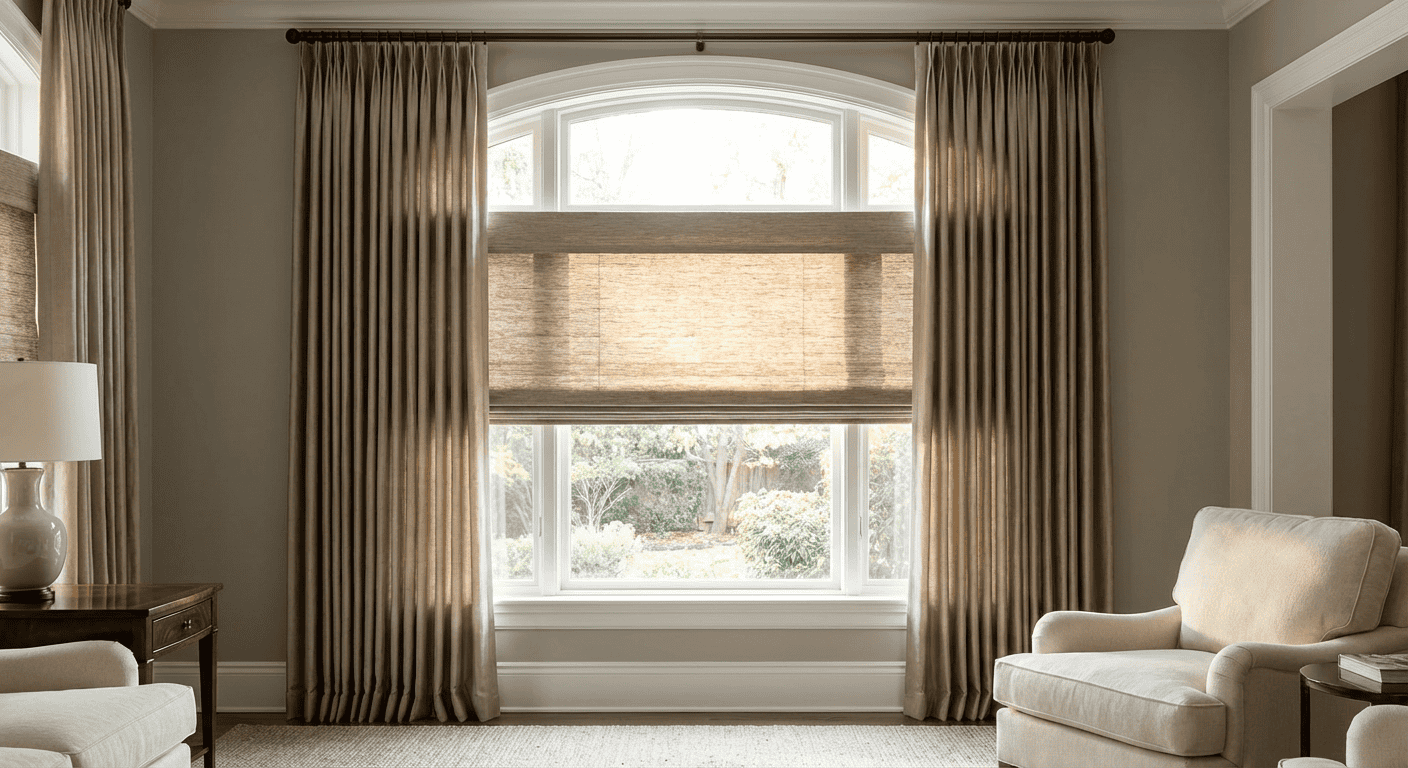
Selecting tailored window treatments ensures that challenging expanses, such as double-height great rooms or curved transoms, receive seamless coverage that aligns with the home’s broader finish palette.
FAQ
Choosing the ideal custom window treatments requires balancing personal style, environmental durability, and day-to-day convenience. Explore the table below for answers to common questions regarding material selection, smart automation, and local installation timelines.
| Question | Answer |
|---|---|
| How do custom window treatments compare to ready-made blinds for sun control in Marietta, Georgia? | Ready-made blinds leave gaps along window frames that let intense Georgia sunlight bleed into living spaces. Custom window treatments are measured to the exact fraction of an inch, eliminating side gaps to block heat gain and protect hardwood floors from fading. If your home has west-facing exposure, custom cellular shades or lined drapes offer significantly better thermal resistance than off-the-shelf panels. |
| Which styles hold up best in high-humidity areas like bathrooms and kitchens? | Faux wood blinds, composite shutters, and moisture-resistant solar screen roller shades perform best in humid rooms. Natural hardwoods and unlined silk fabrics can warp, bow, or mildew when exposed to steam from showers or cooking. Choosing synthetic polymers or treated polyester blends ensures your coverings maintain their structure and finish across muggy summer months in Marietta, Georgia. |
| Can motorized shades integrate directly with existing smart home platforms? | Most modern motorized window shades connect directly to platforms like Apple® HomeKit®, Amazon Alexa, and Google Assistant™ via a dedicated bridge or hub. This setup allows you to automate daily schedules, raising shades at sunrise and lowering them during the hottest afternoon hours. If you want hardwired power rather than rechargeable battery wands, you will need to plan low-voltage wiring before drywall work finishes. |
| What should homeowners in Marietta, Georgia expect for production and installation lead times? | Standard custom window treatments typically require two to six weeks from final laser measurement to professional installation. Basic roller or faux wood styles lean toward the shorter timeline, while hand-stitched custom drapery or specialty plantation shutters require additional crafting time. Local installation by trained technicians usually takes between two to four hours for an entire home once the products arrive. |