
Answer
Composite shutters typically last 15 to 25 years. They resist moisture and offer lasting strength, qualities wood shutters may not match in all settings. DM Interiors suggests composite shutters for their long life and steady performance, particularly in humid spaces. Premium wood shutters usually cost $300-$700 USD per window. Interior composite shutters often range from $250-$550 USD per window, presenting a budget-friendly choice.
Overview
Selecting interior window treatments means weighing several factors beyond just their initial look. This section examines the practical differences, material benefits, and visual effects of both composite and wood shutters. It also covers their durability, maintenance needs, and how well they suit various home settings.
A real-world example, featuring Olivia, helps illustrate common choices. Her situation shows how specific home requirements can influence the selection of window coverings.
- Durability Factors: Learn about the inherent strengths of composite shutters interior products, especially in demanding environments.
- Aesthetic Comparison: wood versus composite shutters compare in appearance and design versatility.
- Real-World Example: Observe how homeowner decisions depend on budget and room use in our cost analysis scenario.
- Moisture Resistance: Find out which materials perform better in high-moisture areas.
- Selection Tips: Get practical advice for choosing shutters that match your specific needs.
- Installation Process: Review what to expect when installing interior shutters.
Composite Shutters Interior Durability
Quality composite shutters typically last 15 to 25 years, providing long-lasting value. Their engineered design creates this durability, resisting common problems such as warping, cracking, and fading, unlike natural wood in certain conditions. DM Interiors recommends composite options for clients seeking window treatments that offer extended service.
These materials withstand daily use, making them a good choice for active homes. Wood can absorb moisture and react to humidity changes, but composite shutters keep their shape. This reduces the need for frequent repairs or refinishing, making them a dependable option for interior spaces.
Keeping composite shutters clean involves simple, regular care. Unlike wood shutters, which may require specific cleaners or polishes, composite materials usually need only mild solutions. DM Interiors suggests regular light cleaning to maintain their look and extend their service life.
Maintenance Steps for Composite Shutters
- Dust the shutters often with a soft cloth or duster to remove loose particles.
- Wipe surfaces with a damp cloth and mild soap for a deeper clean.
- Do not use harsh chemical cleaners or abrasive scrubbing pads, as these can harm the finish.
- Dry the shutters completely with a clean, soft cloth to prevent water spots or streaks.
- Check louver mechanisms for debris and remove it carefully to ensure smooth operation.
| Durability Factor | Composite Shutters | Wood Shutters |
|---|---|---|
| Moisture Resistance | Highly resistant; good for high-humidity areas like bathrooms and kitchens. | Can warp, crack, or grow mildew in high-moisture settings. |
| UV Resistance | Made with UV inhibitors to resist fading and yellowing over time. | May fade or change color with prolonged direct sunlight exposure. |
| Impact Strength | Durable material resists dents and scratches from everyday use. | Softer wood types are prone to dings and surface damage. |
| Lifespan Expectancy | Often lasts 15-25 years with proper care, providing Composite Shutters longevity. | Can last decades, but lifespan depends on environmental conditions and care. |
| Maintenance Needs | Low maintenance; easy to clean with soap and water. | May need specialized cleaning, occasional refinishing, or repainting. |
| Structural Stability | Resists warping and twisting, keeping shape over time. | Can expand and contract with temperature and humidity changes, possibly causing alignment issues. |
Aesthetic Differences Wood vs. Composite Shutters
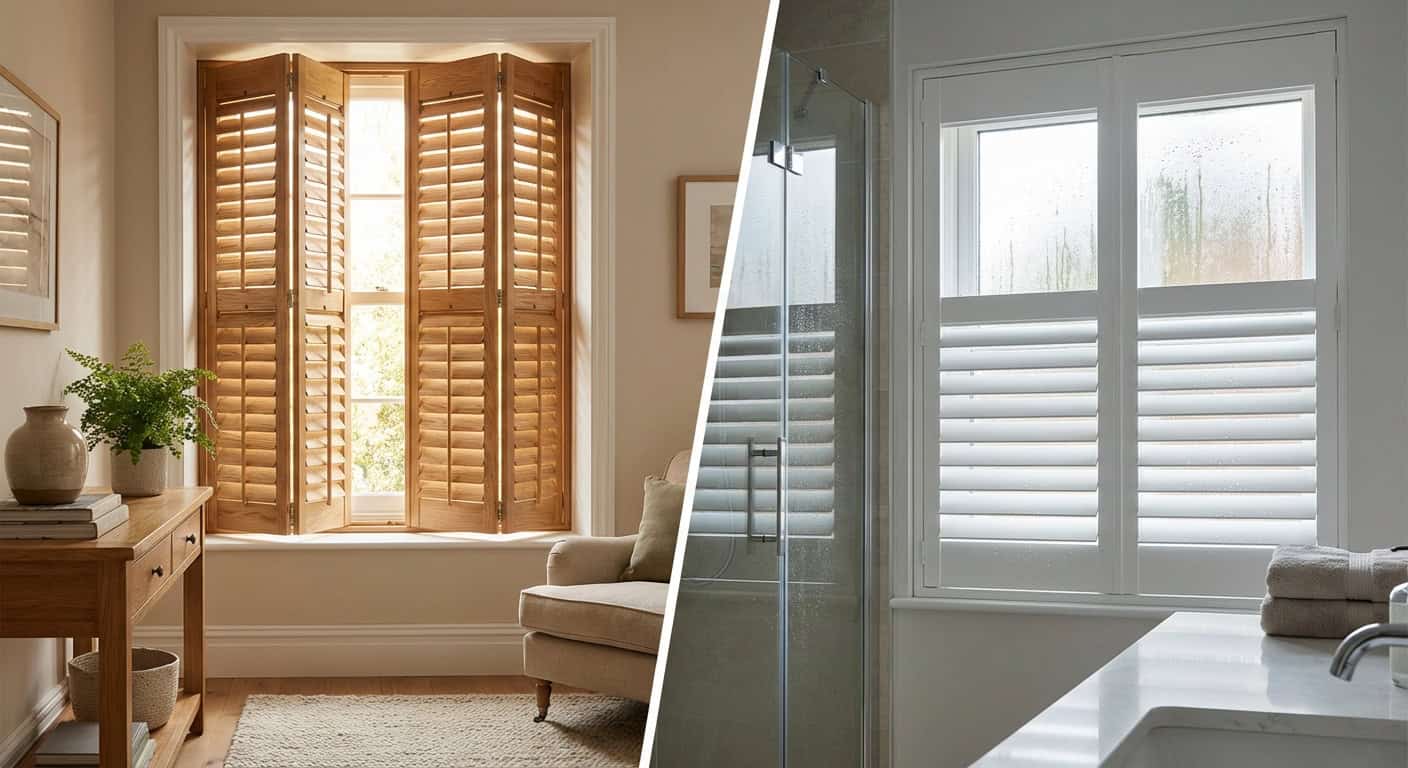
Wood and composite shutters offer distinct visual qualities for interior spaces. Wood shutters feature natural grain patterns and textures, providing a traditional warmth. In contrast, composite shutters present a consistent, uniform finish, often appearing like painted wood but without natural variations.
When choosing between these materials, consider the room’s overall style and the desired finish. Wood shutters accept stains to highlight their natural beauty or paint to match specific color schemes, allowing for extensive customization. wood shutters often suit classic or rustic interior designs.
Composite shutters, including options from Hunter Douglas, deliver a clean, modern look with a smooth, lasting surface. These shutters typically come in various white and off-white shades, fitting modern or minimalist aesthetics. Composite materials maintain paint finishes well, ensuring a crisp appearance over time.
| Feature | Wood Shutters | Composite Shutters |
|---|---|---|
| Grain and Texture | Natural, visible wood grain with variations | Smooth, uniform finish, mimics painted wood |
| Finish Options | Stainable to highlight natural wood, wide range of paint colors | Primarily painted finishes, typically white or off-white |
| Customization | High potential for unique stains and custom paints | Consistent appearance, less variation in finish |
| Overall Style | Traditional, classic, rustic, or warm | Modern, clean, uniform, or contemporary |
| Durability of Finish | May show wear or scratches over time, can be refinished | Highly resistant to chipping, cracking, and fading, durable Composite Shutters |
| Louver Size Availability | Available in various louver sizes | Available in various louver sizes, including wider options |
Cost Analysis: Composite vs. Wood Shutters
Selecting interior shutters requires evaluating material longevity, visual preferences, and budget. Different materials provide varied service lives and care requirements, influencing their lasting value and suitability for specific rooms.
Olivia is updating her living room and needs new shutters for all windows. She is weighing options between composite interior shutters and traditional wood shutters, focusing on both the initial purchase price and how well they will last. Olivia questions if composite styles offer the same visual appeal as wood, especially for a busy living room, and if they represent a better investment than wood. What shutter type should Olivia select for her home?
Recommendation: Composite Shutters
DM Interiors suggests composite shutters because of their improved strength and moisture resistance. This makes them a steady choice for various home settings. They offer extended performance and present a budget-friendly option compared to wood, fitting well within a moderate spending plan.
Best Composite Shutters for High-Moisture Areas
Rooms with high humidity, such as bathrooms, kitchens, and laundry rooms, require window treatments that withstand moisture. Interior composite shutters perform well in these settings because they are built to prevent warping, cracking, or peeling. This durability surpasses traditional wood, which can deteriorate in damp conditions.
Their construction, which often combines wood composites and synthetic materials, provides strong stability against humidity changes. DM Interiors finds these shutters particularly effective in bathrooms where steam and water splashes occur frequently, offering a stylish and practical option for homeowners.
When choosing shutters for damp locations, consider the material’s ability to resist water. DM Interiors’ local experience shows that composite materials handle wet conditions much better than natural wood. For these challenging spaces, consider Faux vs Real composite products.
| Factor | Suitability for Humid Environments |
|---|---|
| Material Composition | Engineered polymers and wood byproducts resist moisture absorption. |
| Warping Resistance | Less prone to bowing or twisting compared to natural wood. |
| Finish Durability | Specialized coatings protect against peeling and chipping in damp conditions. |
| Maintenance | Easy to clean with a damp cloth, resisting mold and mildew. |
| Longevity | Provides 15 to 25 years of service, even in humid rooms. |
| Aesthetic Match | Available in finishes that mimic the look of wood shutters, fitting various interior styles. |
DM Interiors Tips for Choosing Shutters
Selecting interior shutters for a home involves considering several aspects beyond initial looks. Homeowners should evaluate the room’s environment, desired maintenance effort, and long-term resilience. Different features become important based on where the shutters will be placed.
DM Interiors suggests evaluating moisture exposure, sunlight strength, and the desired room style. For example, bathrooms and kitchens benefit from materials that resist humidity and warping. If easy cleaning and minimal upkeep are priorities, specific materials will perform better over time.
When making a selection, consider the installation location and how shutters will complement existing decor. If a classic wood appearance is desired alongside improved performance, composite shutters provide a good combination. For maximum durability in busy areas, certain options stand out.
| Situation | Recommended Shutter Type |
|---|---|
| High-moisture areas (bathrooms, kitchens) | Composite or Vinyl Shutters |
| Rooms with direct, intense sunlight | Composite or Shutters with UV protection |
| Formal living areas, classic aesthetic | Wood Shutters or premium composite designs |
| Pet-friendly or child-safe environments | Cordless or easily cleaned composite options |
| Budget-conscious projects | Standard composite or Plantation Shutters in less expensive finishes |
Installing Composite Shutters Interior Guide
Installing interior shutters begins with exact measurements. Accurate sizing ensures a tight fit, which supports the shutters’ light control and insulating qualities. Small measurement errors can create gaps, negatively affecting both the appearance and how well the composite shutters function once installed.
The installation process typically involves securing frames to the window opening, then attaching the shutter panels to these frames. This task often requires specific tools and careful attention. DM Interiors frequently suggests professional installation, particularly for custom-sized or unusually shaped windows, to ensure peak performance and long product life for items like Composite Shutters or Plantation Shutters.
Select a mounting style that fits your window and desired look. Outside mount frames are often used when the window opening lacks enough depth for an inside mount, or when you prefer the shutters to extend past the window trim. In contrast, inside mount shutters provide a cleaner, more integrated appearance, sitting within the window frame itself.
Recommendation: Professional Shutter Installation
DM Interiors advises professional installation for most property owners, especially when working with non-standard window dimensions or intricate architectural details. This method guarantees precise fitting, avoids typical installation mistakes, and extends the lifespan of the window treatments.
FAQ
Still have questions about composite shutters interior options? We’ve compiled answers to some of the most common inquiries to help you make an informed decision.
| Question | Answer |
|---|---|
| How long can I expect quality composite shutters to last? | Quality composite shutters typically provide a service life of 15 to 25 years with proper care. Their engineered construction resists warping, cracking, and fading, offering excellent long-term value. This durability makes them a practical choice for busy households and areas prone to daily wear and tear. |
| Are composite shutters a good choice for bathrooms and kitchens? | Yes, composite shutters interior options are highly recommended for bathrooms and kitchens due to their superior moisture resistance. They are engineered to prevent warping, cracking, or peeling, even in high-humidity environments where natural wood might deteriorate. This makes them a durable and reliable solution for these areas. |
| How do the costs of composite shutters compare to wood shutters? | Composite shutters are generally more budget-friendly than premium wood shutters. While wood shutters can range from $300-$700 USD per window, composite options typically fall between $250-$550 USD per window. This makes them a cost-effective alternative without sacrificing significant durability. |
| What are the main aesthetic differences between wood and composite shutters? | Wood shutters naturally display unique grain patterns and textures, offering a warm, traditional look that can be stained or painted. Composite shutters provide a consistent, uniform finish, often mimicking painted wood with a smooth surface. They are usually available in shades of white and off-white, lending themselves to modern or minimalist designs. |