DM Interiors & Design Blog

Home Office Interior Design: Boost Productivity & Comfort

Turning Your Vision Into Reality

Table of Contents

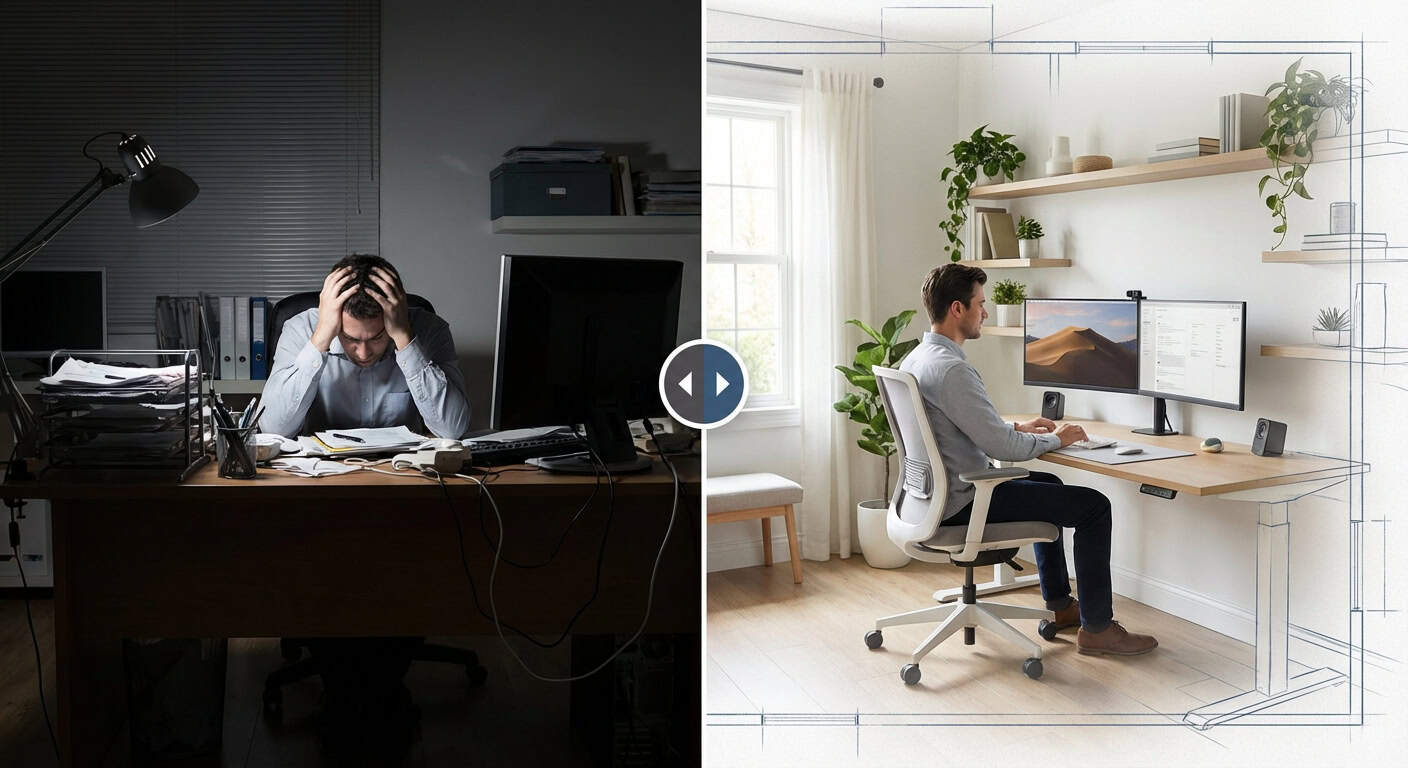
Frustrated man working late at office desk with clutter and stress.

Related Posts

March 4, 2026 | By DM Interiors & Design
Frustrated man working late at office desk with clutter and stress.

Home Office Interior Design Basics

Creating an effective home office interior design is crucial for enhancing both productivity and overall well-being in your workspace. A well-designed home office transcends mere aesthetics; it’s about crafting an environment that supports focus, comfort, and efficiency.

The fundamental aspects of this design approach involve understanding how various elements like layout, lighting, color, and furniture interact to create an optimal working atmosphere. Thoughtful planning can transform a simple room into a dynamic space where ideas flourish and tasks are completed with ease. Understanding your options for interior color palettes can greatly influence the mood and functionality of your space.

Prioritizing home office interior design ensures your workspace is not only visually appealing but also a functional sanctuary. This guide will help you set the stage for a productive and comfortable remote work experience.

Thoughtful home office interior design can significantly improve your daily productivity and comfort. By carefully considering layout, lighting, and furnishings, you can create a workspace that truly supports your professional needs.

What is Home Office Interior Design?

Home office interior design is the specialized practice of creating a functional, comfortable, and inspiring workspace within a residential setting. It goes beyond simply placing a desk and chair, focusing instead on integrating aesthetics with practicality to support productivity and well-being. For inspiration on how color can impact your space, explore our guide to interior color palettes for more.

This discipline considers various elements to transform a dedicated space into an efficient work environment. Effective home office interior design aims to minimize distractions, optimize workflow, and reflect the homeowner’s personal style and professional needs.

The scope of home office interior design encompasses several key considerations:

  • Space Planning: Maximizing the available footprint, whether it’s a dedicated room or a small corner, to ensure efficient layout and traffic flow.
  • Ergonomics: Selecting furniture and equipment that support proper posture and reduce physical strain during long working hours.
  • Lighting Design: Incorporating natural and artificial light sources to reduce eye strain and enhance mood.
  • Storage Solutions: Implementing systems that keep the workspace organized and clutter-free, from shelving to filing cabinets.
  • Aesthetics: Choosing colors, textures, and decor that create a cohesive and motivating atmosphere.
  • Technology Integration: Planning for power outlets, cable management, and equipment placement to ensure seamless operation.

Thoughtful home office interior design significantly impacts both efficiency and comfort. A well-designed space can reduce stress, improve focus, and even enhance creativity, making the remote work experience more enjoyable and sustainable. For inspiration on creating a visually appealing workspace, explore our guide to seasonal window decor trends for more.

Ultimately, home office interior design is about crafting an environment where work feels less like a chore and more like a dedicated pursuit, perfectly tailored to the individual’s professional life at home.

Core Principles of Effective Home Office Design

Crafting an effective home office interior design involves more than just aesthetics; it requires a thoughtful approach to optimize your workspace for both productivity and comfort. By understanding core design principles, you can create an environment that supports your work style and enhances your daily routine.

This section delves into key elements such as proper lighting, ergonomic considerations, and smart storage solutions, providing actionable advice to transform your home office into an optimal work environment. When selecting window treatments, consider the pros and cons of composite shutters vs wood to best suit your needs.

Optimizing Lighting for Productivity and Well-being

Proper lighting is paramount in any home office interior design, directly impacting your mood, focus, and eye health. Natural light is ideal, so position your desk near a window if possible to maximize its benefits. Ensure your screen does not have a glare, which can cause strain. For additional insights into managing light and enhancing your space, explore our guide to controlling light for more.

Beyond natural light, incorporate layered lighting. This includes ambient lighting for overall illumination, task lighting (like a desk lamp) for specific work, and accent lighting to add visual interest. Adjustable lamps are particularly beneficial, allowing you to control the light intensity and direction as needed throughout the day.

Ergonomics: Comfort and Health in Your Workspace

Ergonomics is a critical principle for a successful home office interior design, focusing on arranging your workspace to fit your body and prevent strain. Investing in an ergonomic chair is essential, as it provides proper lumbar support and encourages good posture. Your monitor should be at eye level, and your keyboard and mouse positioned so your wrists remain straight. For more on creating a stylish and functional space, explore our interior design tips for more.

Consider a standing desk option to vary your posture throughout the day, which can reduce fatigue and improve circulation. Regular breaks and stretching are also vital for maintaining comfort and health during long working hours in your home office.

Streamlined Storage and Organization Solutions

Effective storage is key to a clutter-free and productive home office. Utilize shelving units, drawer organizers, and wall-mounted solutions to keep your supplies tidy and accessible. Consider incorporating decorative baskets or boxes to hide less aesthetically pleasing items. For a cohesive look, explore different interior color palettes that complement your existing decor and create a calming atmosphere.

Effective storage and organization are fundamental to maintaining a clutter-free and efficient home office interior design. A well-organized space reduces distractions and makes it easier to find what you need. Utilize vertical space with shelves and wall-mounted units to keep your desk clear.

Incorporate filing cabinets, drawers, and decorative bins to store documents and supplies neatly. Cable management solutions are also crucial to prevent tangled wires and maintain a clean aesthetic. By implementing thoughtful storage, you can ensure your home office remains a functional and inviting space, much like how seasonal window decor can enhance your home’s ambiance. Choosing the right window treatments, such as exploring options for cellular shades vs roman shades, can further elevate the room’s functionality and style.

Thoughtful home office interior design is essential for creating a productive and comfortable workspace, transforming how you work from home.

Key Elements of Home Office Interior Design Styles

Understanding various home office interior design styles can help you create a workspace that reflects your personal taste and supports your professional needs. Each style offers a unique aesthetic and functional approach, allowing for a personalized environment. From sleek modernism to cozy traditionalism, the right design elements can significantly impact your daily work experience. For instance, exploring interior color palettes can set the mood and enhance productivity.

When planning your home office, considering different styles is crucial for integrating the space seamlessly with the rest of your home. It also ensures that the chosen aesthetic contributes positively to your productivity and comfort. Explore these distinct design aesthetics to find inspiration for your ideal home office, or discover more about office interior design to create a functional and stylish workspace.

  • Modern. This style emphasizes clean lines, functional furniture, and a minimalist color palette. Materials like glass, metal, and polished wood are common, creating a sophisticated and uncluttered look for your home office interior design.
  • Minimalist. Characterized by simplicity and a “less is more” philosophy, minimalist home offices feature essential furniture, ample negative space, and a neutral color scheme. This approach reduces distractions, promoting focus and clarity.
  • Traditional. Drawing inspiration from classic designs, a traditional home office often includes rich wood finishes, detailed furnishings, and classic textiles. This style creates a warm, established, and often luxurious atmosphere.
  • Industrial. With an emphasis on raw and unfinished materials, industrial design incorporates elements like exposed brick, metal accents, and reclaimed wood. This style gives a robust and urban feel to any home office interior design.
  • Scandinavian. Known for its light, airy, and functional spaces, Scandinavian design focuses on natural light, light-colored woods, and simple, practical furniture. It fosters a calm and productive environment.
  • Bohemian. This eclectic style combines various patterns, textures, and global influences. A bohemian home office might feature vibrant colors, unique artifacts, and comfortable, layered textiles, creating an inspiring and unconventional workspace.

When selecting window treatments for your home office, consider how they complement the chosen design style. For example, sleek, modern blinds might suit a minimalist or industrial office, while custom window treatments can add a touch of luxury to a traditional space.

Exploring different interior design styles can help you create a home office that perfectly suits your needs and aesthetic preferences. For more ideas on how to achieve a stylish and functional space, check out our interior design trends tips for inspiration.

Thoughtful home office interior design is essential for fostering a productive and comfortable remote work environment.

Choosing the Right Furniture for Your Home Office

Selecting the appropriate furniture is a cornerstone of effective home office interior design. The right pieces not only enhance the aesthetic appeal of your workspace but also significantly contribute to your comfort and productivity. Consider how each item integrates into your overall design vision and supports your daily tasks.

Prioritizing ergonomic design in your furniture choices is crucial, especially for items like your office chair and desk. Proper ergonomics can prevent discomfort and strain during long working hours, making your home office a more sustainable and enjoyable place to work. A well-designed setup supports good posture and reduces the risk of work-related injuries. For inspiration on creating a stylish and functional space, explore our interior design trends and tips.

Filing cabinets, bookshelves, credenzas, floating shelves. Helps organize documents, supplies, and personal items, reducing clutter and maintaining a tidy home office interior design. For window treatments, consider the benefits of honeycomb vs pleated shades.

When making selections for your home office interior design, think about the long-term impact on your well-being and efficiency. Investing in quality furniture tailored to your needs will pay dividends in improved focus and reduced physical strain. It also allows for a more personalized and cohesive look for your workspace.

Boosting Productivity and Comfort

Thoughtful home office interior design plays a crucial role in enhancing both productivity and comfort. A well-designed workspace minimizes distractions, supports focus, and promotes a sense of well-being, directly impacting work quality and efficiency. Exploring current interior design trends can offer fresh inspiration for creating such an environment, including considering effective window treatments for extreme climates.

Achieving optimal productivity and comfort involves careful consideration of several design elements, from lighting and ergonomics to color schemes and storage. Each component contributes to creating an environment that fosters concentration and reduces physical strain.

Optimizing Natural Light for Productivity

Natural light is a powerful tool in home office interior design for boosting productivity and overall comfort. Maximizing its presence can significantly improve mood, reduce eye strain, and even regulate sleep patterns, leading to more energetic and focused workdays.

For example, our team once worked with a client who struggled with afternoon slumps in their home office. The space had a single window that was often obstructed. By repositioning the desk to face the window and installing sheer blinds that diffused light without blocking it, we transformed the room. This simple adjustment in home office interior design allowed for consistent, glare-free natural light throughout the day, which the client reported led to increased energy and a noticeable improvement in their concentration and overall comfort. If you’re looking to achieve similar transformative results in your own space, consider consulting with custom interior designers for expert guidance.

Ergonomics and Workflow Efficiency

Integrating ergonomic principles into your home office interior design is fundamental for sustained comfort and preventing work-related injuries. This includes selecting the right chair, desk height, and monitor placement to support a healthy posture. For more on creating an efficient workspace, explore our guide to office interior design, and consider how custom window treatments can enhance natural light and reduce glare.

An efficient workflow also depends on the layout of your space. Arranging frequently used items within easy reach and organizing your digital and physical files logically can save valuable time and reduce mental clutter, contributing to a more productive home office interior design.

Thoughtful home office interior design is essential for creating a workspace that supports both productivity and comfort, turning a functional area into an inspiring environment.

Implementing Your Home Office Design Plan

Once you have a clear vision for your workspace, implementing your home office design plan requires a structured approach. A well-executed home office interior design not only enhances aesthetics but also boosts functionality and comfort.

Breaking the process down into manageable steps ensures a smooth transition from concept to a fully realized workspace. This detailed guide will walk you through each stage, helping you create an ideal environment tailored to your needs, and you can explore various interior design trends and tips for inspiration.

  1. Initial Planning and Conceptualization: Begin by outlining your specific needs and preferences for your home office. Consider the type of work you do, the equipment you require, and your desired aesthetic. This foundational step is crucial for any effective home office interior design.

  2. Space Assessment and Measurement: Accurately measure your designated office area, noting all dimensions, window placements, and electrical outlets. This information is vital for selecting appropriately sized furniture and planning the layout.

  3. Layout and Furniture Placement: Create a detailed floor plan. Experiment with different furniture arrangements to optimize flow, minimize distractions, and ensure ergonomic comfort. Consider how natural light affects screen glare and placement of key items.

  4. Sourcing Materials and Furniture: Research and select furniture, lighting, and decor that align with your chosen design style and budget. Prioritize ergonomic pieces for comfort and productivity. Remember that the quality of your selections directly impacts the longevity and appeal of your home office interior design.

  5. Professional Consultation (Optional): If you encounter complex design challenges or simply want expert guidance, consider consulting with an interior designer. Professionals can offer valuable insights and solutions, ensuring a cohesive and functional outcome. For example, explore office interior design services to achieve your ideal workspace, or consider how wallpaper can transform your home’s style for more.

  6. Installation and Setup: Assemble and arrange your furniture according to your plan. Install lighting fixtures, shelving, and any technological equipment. Pay attention to cable management to maintain a clean and organized appearance.

  7. Decor and Personalization: Add decorative elements, such as artwork, plants, and personal mementos, to infuse personality into your space. These final touches complete your home office interior design, making it a truly inviting and inspiring environment.

Implementing a thoughtful home office interior design plan transforms your workspace into a productive and comfortable haven, directly impacting your daily efficiency and well-being.

Common Challenges in Home Office Design

Designing a functional and appealing home office can present several hurdles. Home office interior design requires careful consideration of space, aesthetics, and ergonomics to create an environment conducive to productivity.

Many homeowners face issues such as limited space, distractions, or difficulty separating work and personal life. Overcoming these common challenges is crucial for a successful home office setup, and exploring professional office interior design can provide tailored solutions.

  • Limited Space: One of the most frequent challenges is carving out a dedicated workspace in a smaller home. This often means integrating the office into an existing room without overwhelming it.
  • Distractions: Home environments naturally come with various distractions, from family members to household chores. Designing a space that minimizes these can be difficult but essential for focus.
  • Ergonomic Issues: Prolonged work sessions demand proper ergonomics to prevent strain and discomfort. Selecting the right furniture that supports good posture is a common oversight.
  • Lighting: Poor lighting can lead to eye strain and reduced productivity. Many home offices lack adequate natural light or proper task lighting. For example, understanding the difference between cellular shades vs roman shades can help you choose the best window treatments for your space.
  • Storage Solutions: Keeping documents, supplies, and equipment organized is vital for a clutter-free and efficient workspace. Finding storage that is both functional and aesthetically pleasing can be challenging.
  • Maintaining Work-Life Balance: Without clear physical boundaries, it can be hard to switch off from work. The design needs to help define the workspace as distinct from the rest of the home.

Addressing these challenges effectively during the home office interior design process can lead to a more comfortable, productive, and harmonious work environment within your home.

Achieving Your Ideal Home Office Design

Successfully creating your ideal home office environment is a journey that integrates thoughtful planning with practical execution. The insights shared throughout this guide emphasize that effective home office interior design is not merely about aesthetics; it profoundly impacts your daily productivity and overall well-being. By applying the principles discussed, you can transform a simple space into a dynamic hub tailored to your specific work needs and personal style.

Remember that a well-designed home office interior design fosters a focused mindset and reduces distractions. It ensures that your workspace is both functional and a source of comfort, making your work-from-home experience genuinely enjoyable. Embrace the opportunity to personalize your office, reflecting your individuality while supporting your professional goals. For inspiration on how to achieve a stylish and functional space, consider exploring our modern innovations in window treatments for more.

Thoughtful home office interior design is crucial for enhancing both productivity and comfort in your remote workspace.

Ready to get started? Call DM Interiors & Design

Showroom - Flagship Store

By Appointment Only

Transformative Design Can Be Yours

Connect With Our Team Today

Have questions? Ready to get started? Reach out to the DM Interiors & Design team below or stop by our Marietta showroom today.

"*" indicates required fields

Name*

What Sets Us Apart

Elegant Solutions. Exceptional Finds.

Meet With An Expert Designer

Experience a personalized approach to achieving your dream space with our in-house designer, and discover the perfect design elements for your space.

No Project is Too Big or Small

Whether you’re revamping a single room or undertaking a full-home makeover, we're ready to help bring your vision to life.

Licensed, Insured, Vetted Pros

Home projects are stressful enough; you can rest assured that our team is licensed, insured, and thoroughly vetted for your peace of mind.

Financing Options Available

Our flexible financing options support you however you'd like to pay, making it easier than ever to achieve your dream interiors.

This website uses cookies

We use cookies to personalize content, provide social media features, and analyze our traffic. We also share information about your use of our site with our analytics partners. You can change your preferences at any time. For more information, please see our Privacy Policy and Cookie Policy. Privacy Policy