
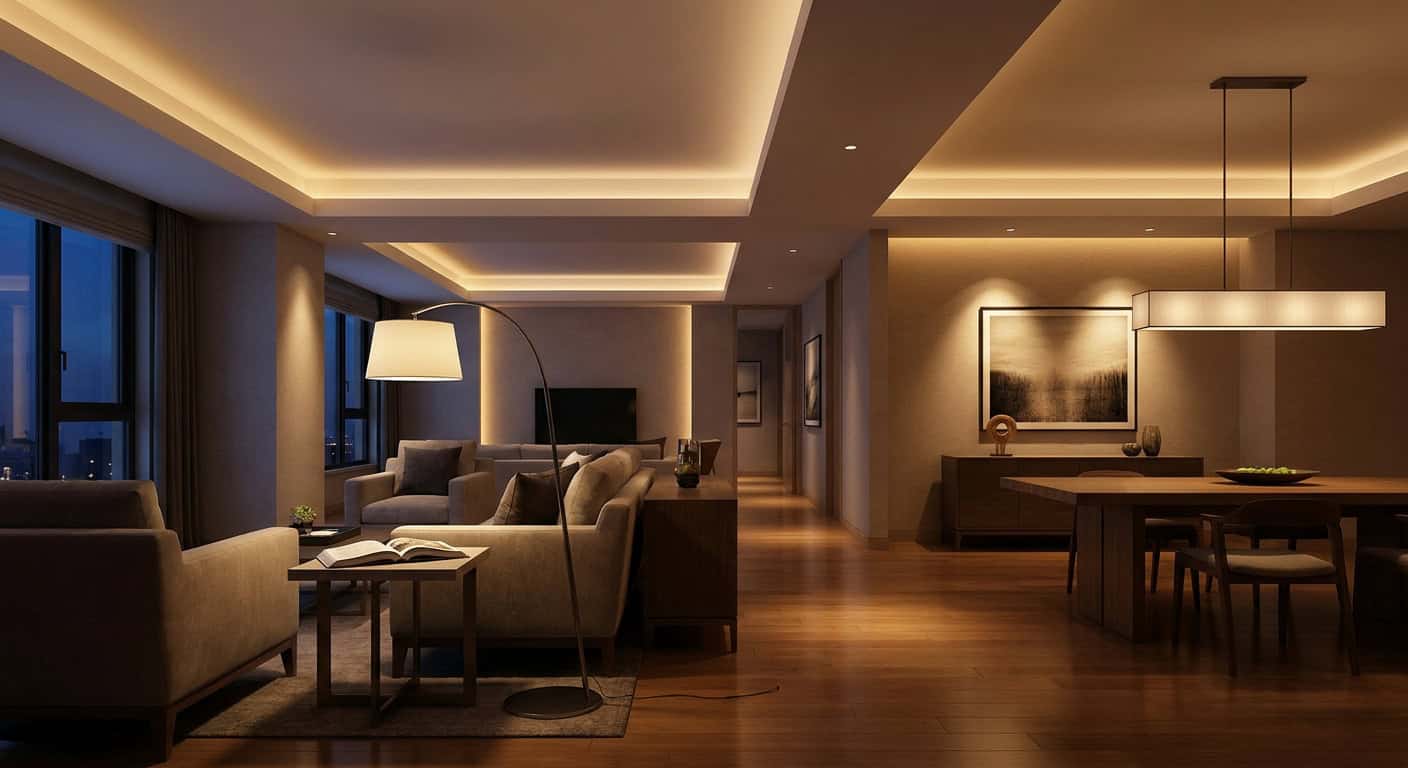
Answer
Careful placement of lights changes a room’s feel, making it welcoming or efficient based on its use. DM Interiors combines different light types, including accent, ambient, and task lighting. This method adds depth and visual appeal to indoor areas. DM Interiors designs lighting to meet both visual preferences and practical requirements for every space.
Overview
This guide examines how to develop custom lighting plans for homes and businesses. It details how different light types affect a space’s mood and purpose. DM Interiors combines visual preferences with practical requirements to create effective designs.
The content also features a hypothetical example with Eleanor, showing how careful lighting choices resolve specific issues and improve overall living areas.
- Ambiance Principles: Learn how to establish mood and purpose through various light sources for Mastering Ambiance with Lighting Design.
- Design Elements: Discover key components that shape effective illumination plans and their impact on different rooms with Effective Home Lighting Design Elements.
- Real-World Example: layered approaches contribute to creating specific atmospheres in our Layering Light for Impact section.
- Fixture Selection: Review the considerations for choosing appropriate fixtures that complement your aesthetic and functional goals with Choosing Fixtures for Your Lighting Scheme.
- Our Approach: Learn the process DM Interiors follows to create personalized solutions through DM Interiors Approach to Lighting Design.
- Vision Realization: Learn how to translate your ideas into a finished design with Bringing Your Vision to Life.
Mastering Ambiance with Lighting Design
Crafting specific moods in a room begins with careful light placement and fixture choices. This method does more than just brighten a space; it directs attention, provides warmth, and sets the overall atmosphere. DM Interiors shows how an effective Lighting Design Create scheme can redefine a room’s character, suitable for either relaxation or active gatherings.
Placing light sources strategically can highlight architectural elements, artwork, or distinct zones within a room. DM Interiors assists clients in selecting items from their Design services and Accessories. These selections complement existing decor while fulfilling their practical function. The outcome is visual harmony and a comfortable environment.
Effective Home Lighting Design Elements
Creating a specific mood in a room depends on different lighting components working together. The selection of light fixtures, bulbs, and control systems affects both the visual appeal and the practical use of any home area. DM Interiors evaluates how each component helps achieve the desired effect during initial discussions.
Carefully arranging different light types can change a room from simply functional to truly welcoming. DM Interiors often recommends using three main lighting categories to add depth: ambient, task, and accent lighting. Each category serves a distinct purpose in shaping a room’s character and usefulness, whether brightening a dining area or highlighting art.
| Element | Purpose in Lighting Design |
|---|---|
| Ambient Lighting | Provides general room illumination, setting the base brightness. Examples include recessed lights, ceiling fixtures, and accessories such as floor lamps. |
| Task Lighting | Directs light to specific areas for activities like reading or cooking. Desk lamps, pendant lights over islands, and under-cabinet lights are common examples. |
| Accent Lighting | Draws attention to architectural features, artwork, or decorative items. Spotlights, wall washers, and picture lights commonly create this effect. |
| Natural Light Control | Manages daylight entering a room, affecting overall brightness and mood. Wall coverings and shades can soften harsh sunlight or block it completely. |
Layering Light for Impact
Crafting a room’s atmosphere involves more than selecting light fixtures; it requires considering how different light types interact. Proper lighting design changes a room’s feel, influencing both mood and how people use the space.
Eleanor is redecorating her living room, aiming for a cozy yet practical setting. She knows that simply adding more lamps will not achieve this. Instead, she considers how various lighting layers, such as ambient, accent, and task lighting, can combine to create her desired mood. How can layered lighting best create the right atmosphere for different areas of the home?
Recommendation: Layered Lighting Approach
DM Interiors suggests a layered lighting method, combining ambient, accent, and task lights. This method offers flexibility for setting specific moods and ensures each area looks good and functions well for its purpose. Consider how blinds or LightLock systems can support these layers by managing natural light.
Choosing Fixtures for Your Lighting Scheme
Choosing appropriate lighting fixtures shapes a room’s appearance and atmosphere. Start by considering the room’s function and the specific light types required. These include ambient light for general brightness, task light for focused activities, and accent light to draw attention to specific features. Homeowners can benefit from reviewing existing interior elements, such as shades Shutters blinds and Wall coverings, to ensure new fixtures complement the current style.
Matching fixture styles with other interior elements creates a unified look. For example, a minimalist space works well with recessed lighting or sleek pendant lights. A traditional room might feature ornate chandeliers or classic sconces. DM Interiors advises evaluating available space to confirm chosen fixtures fit without making the area feel crowded.
- Determine the room’s function and desired mood to select appropriate bright, soft, or layered lighting.
- Measure room dimensions and ceiling height to pick fixtures of suitable size and scale.
- Select a fixture style that complements existing furniture and architectural details.
- Consider light output (lumens) and color temperature (Kelvin) to achieve the desired brightness and warmth.
- Plan for dimmer switches or smart lighting controls to adjust light levels and mood as needed.
| Fixture Type | Common Use |
|---|---|
| Recessed Lighting | Provides general ambient light, often in kitchens or hallways, creating a clean ceiling line. |
| Pendant Lights | Offers task lighting over islands or accent lighting in dining areas. |
| Chandeliers | Serves as central ambient light in dining rooms or entryways, acting as a focal point. |
| Wall Sconces | Supplies accent lighting for art or architectural features, delivering soft, indirect light. |
| Track Lighting | Delivers flexible accent or task lighting, useful for highlighting specific areas or artwork. |
| Table and Floor Lamps | Adds layers of ambient and task lighting, easily repositioned for different needs. |
DM Interiors’ Approach to Lighting Design
DM Interiors crafts lighting plans to define room atmosphere and purpose. We assess how natural light works with artificial sources, creating arrangements that adjust for different times and activities. Our design process prioritizes solutions that blend with current decor and fulfill specific visual requirements.
During planning, we consider both direct and indirect light, selecting fixtures that enhance the interior’s overall look. DM Interiors suggests layered lighting for adaptability, allowing adjustments for specific tasks, desired moods, or highlighting architectural details. This approach may combine recessed lights with decorative pendants or floor lamps to add dimension.
Still, advanced lighting systems do not suit every area. A complex, multi-zone setup, for example, often exceeds requirements for a small closet or pantry, where a straightforward, efficient overhead fixture works better. Installations that are too elaborate can detract from minimalist designs or stretch budgets without offering sufficient value in smaller, functional areas.
| Design Consideration | DM Interiors’ Solution |
|---|---|
| Room Function | We match light types to activity, whether bright task lighting for a kitchen or soft ambient light for a bedroom. |
| Aesthetic Integration | Fixture selection harmonizes with existing furnishings and architectural styles. See our Design services for a full consultation. |
| Energy Efficiency | We suggest modern, energy-saving options that provide optimal illumination with reduced consumption. |
| Budget Constraints | Solutions are scaled to fit financial goals, prioritizing impact without unnecessary expenditure. |
| Future Adaptability | Systems are designed with flexibility for future changes in decor or use. Explore options in our Interior Design services guide. |
Bringing Your Vision to Life
Transforming interior spaces with specific illumination needs careful planning and component selection. DM Interiors assists clients in making their design ideas real. We ensure each light source contributes to the desired mood and function. This collaborative approach makes certain your space reflects your personal style while offering good visibility and comfort.
Creating a unified appearance means combining various items, from light fixtures to control systems. DM Interiors brings together different parts to form a consistent lighting design for homes or businesses. Whether clients seek design services or specific retail products, DM Interiors customizes solutions for each project’s requirements.
| Product Category | Best for | Budget | Reason |
|---|---|---|---|
| Ambient Lighting | General room brightness | Mid-range to high-end | Provides foundational light for the overall room feel. |
| Task Lighting | Focused work areas (kitchens, desks) | Flexible, depending on fixture type | Improves functionality and reduces eye strain in specific zones. |
| Accent Lighting | Highlighting features (art, architectural details) | Varies with fixture and installation | Adds drama and depth, drawing attention to specific elements. |
| Decorative Fixtures | Aesthetic statements and focal points | Broad range, from modest to luxury | Enhances style and contributes to the room’s character. |
| Smart Lighting Systems | Customizable control and efficiency | Higher initial investment | Offers flexibility in dimming, color, and scheduling. |
DM Interiors works with clients to improve their interior spaces, including choosing accessories and other decorative items. DM Interiors helps clients select the correct products to meet their aesthetic goals within the project’s limits.
FAQ
To further illuminate the nuances of creating ambiance through effective lighting design, we’ve compiled answers to some common questions.
| Question | Answer |
|---|---|
| How does layering light types affect a room’s atmosphere? | Layering light types, such as ambient, task, and accent lighting, creates depth and transforms a room’s feel. Ambient light provides general illumination, task light focuses on specific activities, and accent light draws attention to features. This combination allows for flexibility in mood and ensures functionality. |
| When is a complex lighting system not the best choice for a space? | Advanced or multi-zone lighting systems may be unnecessary for small, single-purpose areas like a closet or pantry. In such cases, a simple, effective overhead fixture often provides sufficient illumination without added complexity or cost. |
| What factors should be considered when selecting lighting fixtures? | When choosing fixtures, assess the room’s purpose and desired mood to determine the type of lighting needed. Consider how the fixture style complements existing furniture and architectural details. Measuring the room’s dimensions and ceiling height helps ensure the fixture size is appropriate. |
| How can natural light be managed within a lighting design? | Managing natural light involves controlling how daylight enters a room to impact brightness and mood. Wall coverings and shades can diffuse harsh sunlight or block it entirely, supporting the overall lighting scheme. |