
Answer
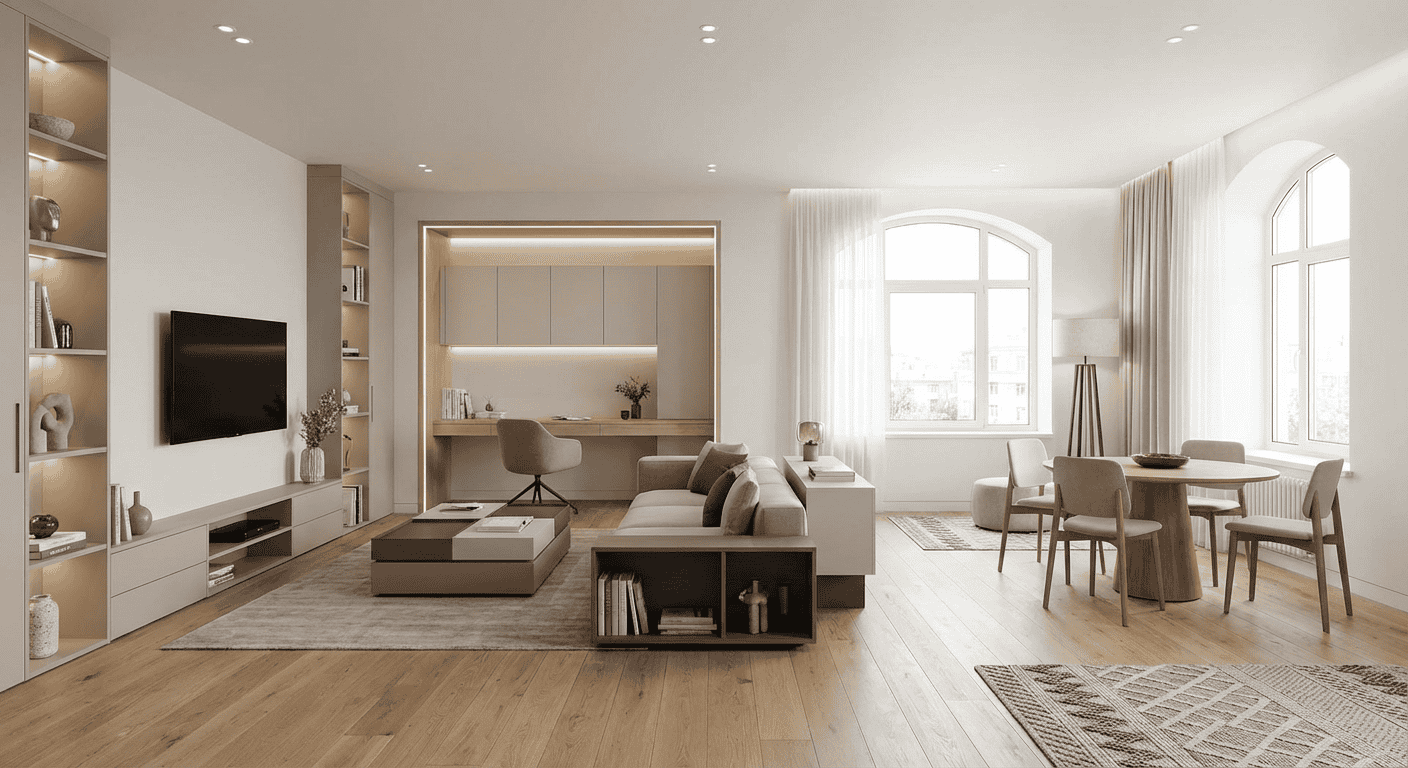
Good space planning arranges rooms to improve movement and practical use. This allows residents to make the most of every part of their home. DM Interiors designs intentional layouts that suit daily life and visual style. This design method makes sure each square foot helps create an organized and pleasant home.
Overview
Organizing living areas improves daily life. Arranging rooms for better accessibility and visual appeal is possible. Homeowners create spaces that suit their individual needs by making practical design choices.
This section also presents a real-world example featuring Chloe. She improved her living space through careful planning. Her decisions resulted in a more balanced home environment.
- Core Ideas: Effective space planning considers how people move and interact in their homes. This ensures each area serves its purpose for better home function.
- DM Interiors Method: DM Interiors creates layouts matching client lifestyles and preferences. This transforms houses into ideal settings with expert design assistance.
- Client Story: Chloe’s experience shows how careful preparation and attention to living areas lead to improved room utility.
- Approach Choice: Different planning approaches fit various home types and personal goals. Selecting the correct method delivers optimal results for method selection.
- Project Results: Successful space planning projects confirm that detailed preparation and execution create more functional homes.
- Home Capabilities: Making the most of a home’s capabilities means looking past current setups to imagine new possibilities for enhanced living areas.
Key Space Planning Principles
Creating a balanced, useful home environment starts with careful planning. Effective space planning examines how each home area will function, providing comfort and efficiency for residents. This process goes beyond just arranging furniture; it shapes how living spaces move and operate.
DM Interiors designs layouts that support daily routines and individual preferences. Every square foot contributes to a better living experience. Even minor adjustments to a room’s layout can greatly improve its usability and visual appeal. For instance, rearranging a living room can establish a distinct reading spot or a more open conversation area.
- Define Zones: Assign specific activities to different areas within a room. This clarity helps organize furniture and decor well.
- Prioritize Flow: Maintain clear paths for movement throughout the home. This prevents crowded areas and creates a natural progression between rooms.
- Consider Scale: Select furniture and fixtures that fit the room’s size. Large pieces can make a small room feel tight, while tiny items disappear in big spaces.
- Maximize Storage: Add built-in solutions or multi-functional furniture to keep items out of sight. This holds particular importance for smaller homes or busy areas.
- Address Lighting: Combine natural light with various artificial sources to brighten spaces and highlight features. Proper lighting affects mood and perceived room size.
- Reflect Personal Style: Include elements that match the homeowner’s taste, creating a personal and welcoming atmosphere. Consider how design services can help express this vision.
These principles guide any interior transformation, making sure the final design is both practical and attractive. Thoughtful planning improves daily living, giving a residence a more harmonious feel. For homes seeking a unified look, our design services cover entire properties, not just single rooms.
How DM Interiors Enhances Your Space
DM Interiors improves residential spaces through custom design solutions. We assist homeowners in reconfiguring rooms, arranging furniture effectively, and choosing decor that matches their personal tastes. Our method changes everyday areas into settings that support daily activities and individual style.
Homeowners frequently want to know how particular design choices affect a room’s overall usefulness. To achieve this, we assess many elements, including furniture size, lighting, and accessories, to create unified living spaces. Our design services always consider the specific function of each room.
DM Interiors follows a structured process for planning every space, balancing visual appeal with practical needs. For instance, choosing appropriate window coverings in can affect light management and privacy, directly impacting how well a room functions. This precise approach makes certain that each design element serves a clear purpose within the home.
| Design Element | Impact on Space | Considerations |
|---|---|---|
| Furniture Layout | Defines traffic paths and activity zones | Scale, proportion, and flow between areas |
| Lighting Fixtures | Sets mood and highlights features | Natural light availability, task lighting needs |
| Color Schemes | Affects perceived size and ambiance | Personal preference, existing elements, room orientation |
| Storage Solutions | Reduces clutter and improves organization | Built-ins, shelving, concealed storage options |
| Window Treatments | Controls light, privacy, and insulation | Fabric type, operating system like Powerview Automation, style |
| Accessories | Adds personality and texture | Proportion, placement, collection display |
Visualize Smart Layouts for Your Home
Many homeowners experience frustration with their current home arrangements, finding them cramped or inefficient for daily activities. While reorganizing rooms can improve living spaces, determining the most effective changes often proves difficult.
Chloe finds her home’s current setup complicates everyday tasks for her family. She questions whether simply moving furniture will be enough or if she needs to consider larger structural modifications to improve how people move through the house. Chloe must decide between rearranging existing items and making more substantial layout changes to create a better living space.
Recommendation: Professional Space Planning Services
DM Interiors suggests a complete design service to address Chloe’s requirements. This method includes a detailed review of traffic flow and room function, ensuring each area serves her daily activities and style preferences effectively. Incorporating systems like Powerview Automation can further improve room layouts by adding smart window treatments that adjust to daily schedules.
Choosing Your Space Planning Method
Choosing the best arrangement for your home depends on factors like project size, budget, and how much you want to participate. DM Interiors offers various design services to help homeowners achieve practical and attractive interiors. Consider your specific requirements to decide if a complete design plan or a more focused consultation works better for your project.
Homeowners can explore both traditional and modern design strategies. Some prefer detailed plans, while others find success through making gradual adjustments. Space planning involves a structured way to arrange items within a room effectively, ensuring each area serves its intended purpose. Interior Design services can help define these approaches.
- Set your project goals, noting what currently works and what needs improvement in existing arrangements.
- Measure the space precisely, including walls, windows, and current furniture to establish an accurate starting point.
- Sketch initial layouts, trying different furniture placements and how people move through the space.
- Consider the function for each zone, making sure there is enough light and easy access for daily tasks.
- Refine your chosen layout by adding feedback and making small changes.
- Find suitable furnishings and decor that fit the new arrangement and desired look.
- Put the plan into action, arranging items according to the final layout.
- Review the completed space, making any minor adjustments for top comfort and usefulness.
For more specific guidance, Interior services explained can provide tailored advice. If you prefer a hands-on approach, DM Interiors assists clients through every phase of the design process, from the first idea to the final setup.
Space Planning Success: A DM Interiors Project
Renovations often reconfigure kitchens and living areas to improve flow and increase usefulness. DM Interiors recently finished a project that transformed a small kitchen and dining room into a unified, open area. This change met specific client requests for better entertaining space and more efficient daily routines.
The initial layout had separate, smaller rooms that felt disconnected. DM Interiors removed a non-load-bearing wall to create one larger, combined space. This allowed for a spacious island, which provides both food preparation area and casual seating. The island was a central part of the client’s vision for their updated home.
Open-concept designs offer many benefits, but they do not suit every homeowner. If a household prefers separate, quiet zones or needs clear division between cooking and living spaces, a traditional segmented layout works better. The table below lists common points to consider when deciding on design strategies for homes.
| Pros | Cons |
|---|---|
| Enhanced natural light throughout the main floor. | Reduced privacy between functional areas. |
| Improved social interaction during gatherings. | Increased noise transfer between spaces. |
| Greater flexibility for furniture arrangement. | Higher heating/cooling costs if not properly insulated. |
| Modern, expansive aesthetic. | Requires careful space planning to avoid clutter. |
Maximize Home Potential Through Planning
Thoughtful interior design improves how rooms function to better fit resident needs. Consider how furniture placement, lighting, and color schemes shape a room’s overall feel and usefulness. Intentional design creates environments that are both visually pleasing and highly efficient.
DM Interiors partners with homeowners to define their vision, providing expert design services that turn ideas into clear plans. Clients gain much from seeing how different elements work together in a room before making purchases. This cooperative method ensures the final design matches their lifestyle and preferred look.
DM Interiors helps clients make informed choices for their living areas. Our aim is to create spaces that appear larger, brighter, and more intentional. For project examples, visit our portfolio to review how past homes changed.
| Method | Best for | Consideration | Reason |
|---|---|---|---|
| Open Concept Layouts | Social households or smaller homes seeking spaciousness | Defining zones without physical walls | Promotes interaction and visual flow across connected areas, but requires careful space planning for distinct functions. |
| Zoned Areas within Rooms | Large rooms with multiple functions (e.g., living/dining combo) | Using rugs, furniture, or lighting to delineate spaces | Maintains an open feel while providing separate activity areas, such as a reading nook or a home office. |
| Built-in Storage Solutions | Homes with limited square footage or clutter concerns | Custom cabinetry, shelving, or wall units | Maximizes vertical space and reduces visual clutter, contributing to an organized and tidy home. |
| Flexible Furniture | Multi-purpose rooms or changing family needs | Modular sofas, nesting tables, or pull-out beds | Allows for quick adaptation of a room’s function, offering versatility for guests or evolving daily use. |
FAQ
To help you further maximize your home’s layout, we’ve compiled answers to some common questions about effective space planning.
| Question | Answer |
|---|---|
| How does defining zones improve a home’s layout? | Defining zones assigns specific activities to different areas within a room. This clarity helps organize furniture and decor effectively. It ensures each part of a room serves a distinct purpose, contributing to better overall home function. |
| What is the impact of furniture scale on a room’s appearance? | Choosing furniture that matches a room’s dimensions is important. Oversized pieces can make a small room feel cramped. Conversely, tiny items may get lost in large spaces, affecting the room’s perceived size and balance. |
| When might a segmented home layout be preferable to an open-concept design? | A segmented layout is better if a household prefers distinct, quiet zones. It also suits homes with a strong need for separation between cooking and living activities. This approach can offer more privacy and reduce noise transfer. |
| How can lighting choices enhance a home’s living areas? | Proper lighting influences mood and the perceived size of a room. Combining natural light with various artificial sources can brighten spaces and highlight features. This attention to lighting contributes to a more inviting atmosphere. |