
Answer
Professional interior design services reshape rooms by combining elements such as furniture, textiles, and lighting. This process creates a unified and welcoming atmosphere within any space. DM Interiors develops specific design plans that match client preferences and meet practical requirements. The typical cost for an interior designer ranges from USD $2,000 to USD $15,000, not including furniture. Project size and complexity determine the final price.
Overview
Professional design improves living spaces by applying various methods and their benefits. DM Interiors assists clients in creating rooms that match their personal preferences and daily requirements. The content includes a hypothetical example featuring Chloe, showing how design choices result in a personalized space, along with a specific suggestion for her home.
- Home Potential: Learn to maximize your home’s style.
- Choosing Services: Select the correct design approach for your project.
- Real-World Example: Observe how DM Interiors realized a client’s vision.
- Design Process: Review each step in the design journey.
- See Transformation: Examine project outcomes and their effects.
- Invest in Future: Consider the long-term value of design investments.
Unlock Your Home’s Potential
Professional design transforms living spaces, uniting diverse elements into a unified whole. DM Interiors creates custom solutions that match individual tastes and practical needs. This ensures every room feels personal and supports daily activities effectively. When a home requires a refreshed style, professional interior design services assist homeowners in realizing their vision.
Many homeowners seek professional guidance to define their style or address specific challenges, such as space planning and furniture selection. We assist clients in choosing appropriate elements, from window treatments to color palettes, to create inviting atmospheres. DM Interiors’ design services aim to build environments that improve daily living.
Choosing Interior Design Services
Selecting interior design services begins with evaluating your project’s needs and personal style. Designers often specialize in distinct aesthetics, from modern looks to classic styles, making it important to find an expert whose work aligns with your vision. DM Interiors suggests clients gather inspiration images to define their desired outcomes, which helps make the design process more efficient.
Think about the project’s scale, whether it is a single room update or a full home renovation. Some designers focus on specific areas, such as Office Interior Design, while others offer broader residential options. Having a clear budget and timeline also helps guide you to appropriate design professionals.
When seeking interior design services, examine a designer’s portfolio to ensure their completed work matches your preferences. Reviewing past projects shows their aesthetic range and their approach to design challenges. DM Interiors invites prospective clients to view its Portfolio to see various finished projects.
| Service Type | Project Focus | Ideal For |
|---|---|---|
| Full-Service Design | project management from concept to installation. | New constructions, major renovations, or whole-home transformations. |
| Room-Specific Design | Targeted design for one or two rooms, like kitchens or bathrooms. | Homeowners wanting to refresh key areas without a full overhaul, such as a Kitchen Interior Design project. |
| Consultation Services | Advice on layouts, color schemes, and material selections. | Clients needing professional guidance for DIY projects or initial planning stages. |
| Commercial Design | Creating functional and appealing spaces for businesses. | Businesses looking to optimize their workspace or retail environment, including Commercial Interior Design. |
DM Interiors Elevates Your Space
Changing a living space goes beyond selecting colors and furniture; it calls for a planned method to establish a unified and practical setting. Many homeowners struggle with achieving their desired look and meeting practical needs within budget limits.
Chloe wishes to update her home’s interior but feels overwhelmed by choices and the process. She questions if investing in professional interior design services truly delivers a beautifully updated space. Should Chloe hire interior design services to manage her home renovation project?
Recommendation: Professional Interior Design Services
DM Interiors suggests professional interior design services for clients like Chloe who seek a cohesive and functional living environment. These services combine furniture, fabric, and lighting for a custom solution that reflects individual preferences and requirements. DM Interiors focuses on creating custom solutions for each project, ensuring personalized results that align with client goals. For significant home renovations, a professional approach helps coordinate all elements, from window treatments to color schemes.
Seamless Design Process
DM Interiors follows a structured process to create personalized spaces that reflect your style. This method moves from the first meeting to the final setup, making sure every item matches your vision. DM Interiors works to ensure each stage leads to a successful outcome for your home.
The process begins with detailed discussions to learn your preferences and functional requirements. DM Interiors then refines ideas and selects materials, always considering your budget and schedule. After design approval, DM Interiors coordinates all purchasing and installation, delivering a cohesive and attractive interior.
- Initial Meeting: This first discussion establishes your project goals, style preferences, and budget. We talk about how you use your space and what you want to achieve. This allows us to customize our interior design services for you.
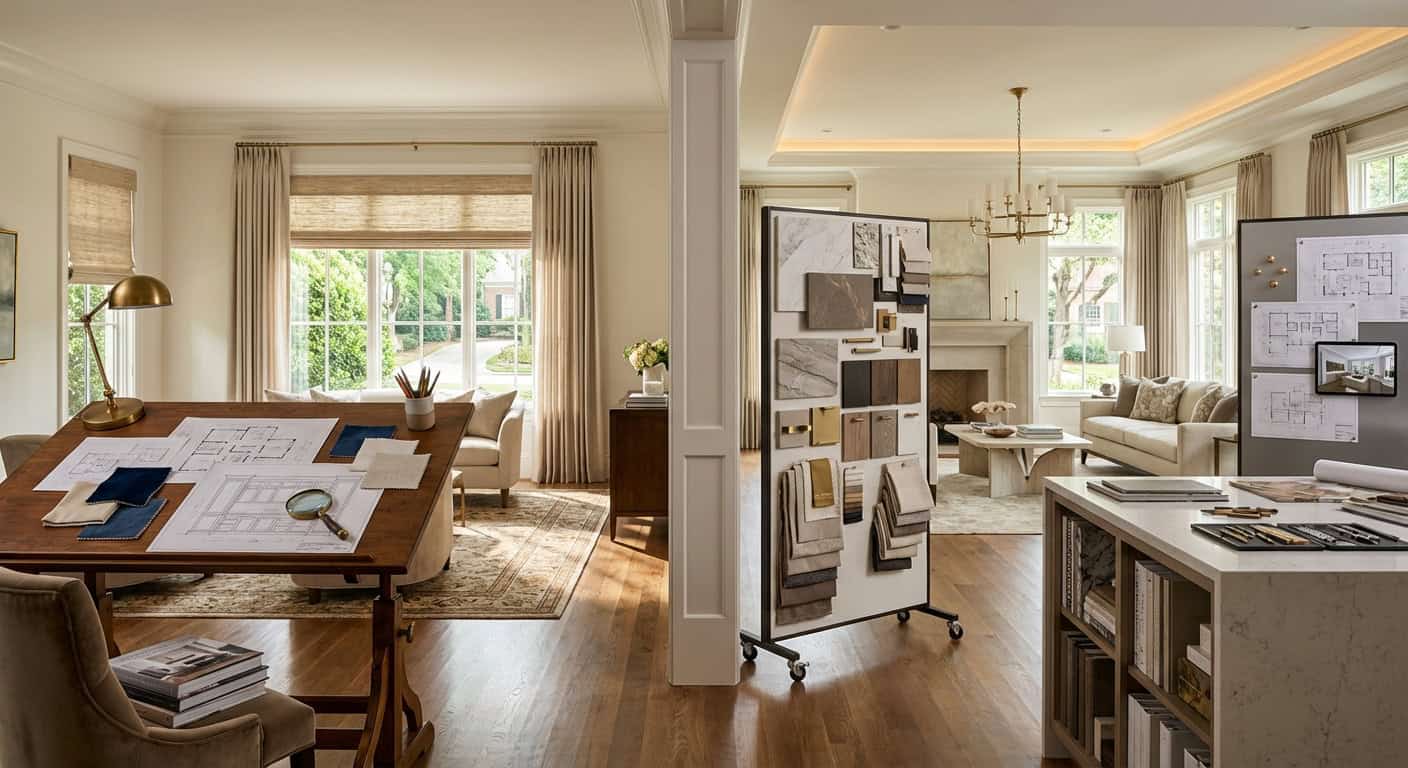
- Concept Creation: Based on the initial meeting, DM Interiors develops design concepts, including mood boards and preliminary layouts. This stage helps visualize possible directions for your home or office space.
- Design Review: We present refined design concepts, material choices, and proposed furnishings. This is a chance to review and give feedback on the suggested plans, including options like window treatments.
- Purchasing and Project Oversight: Once the design receives approval, DM Interiors manages the sourcing of all materials and furnishings. We coordinate with suppliers and contractors, ensuring prompt delivery and quality control for your project.
- Installation and Finishing: The final stage involves the physical installation of all design elements, from furniture placement to hanging artwork. We oversee every detail, including the integration of smart home features such as Powerview Automation.
- Final Walkthrough and Adjustments: The project concludes with a tour of your newly designed space. We address any remaining adjustments to ensure your complete satisfaction with the transformation.
See the Transformation
Design projects deliver clear improvements to living spaces when guided by a strong vision. DM Interiors presents various completed projects, showcasing functional updates and aesthetic enhancements. We create appealing, livable rooms for clients, often surpassing their initial hopes.
Reviewing a portfolio helps clients design concepts appear in actual settings. Our Portfolio displays the range of our work, from small updates to full renovations. These examples show the impact professional interior design services have.
| Project Type | Key Design Elements | Outcome |
|---|---|---|
| Living Room Refresh | Custom window treatments, new furniture arrangement, updated color palette | Natural light increased by 30%, a more unified and welcoming seating area, better room flow |
| Kitchen Remodel | Layout optimization, material selection (countertops, backsplash), integrated lighting | Workflow efficiency improved by 25%, a modern look, better storage solutions. For other kitchen designs, explore our Kitchen Interior Design projects. |
| Bathroom Renovation | Space planning, fixture upgrades, tile selection, enhanced lighting | Perceived space expanded by 15%, a spa-like feel, improved function with new Bathroom Interior Design. |
Invest in Your Home’s Future
Professional design services offer more than just immediate visual upgrades. A thoughtfully designed home can raise property value, enhance daily living, and display personal style for many years. DM Interiors observes that clients who plan for the long term often report higher satisfaction with their living spaces.
Expert direction helps avoid expensive errors and provides access to specialized resources not publicly available. For instance, choosing resilient materials and classic designs keeps interiors attractive without constant renovations. This method positions interior design services as a smart decision for homeowners wanting enduring value.
When planning design work, select the appropriate service based on project size and desired client involvement. For a full room renovation, design can handle every detail, including design services and custom window treatments. If the focus remains on specific items, such as plantation shutters, a targeted consultation may fit best.
| Design Service | Best for | Budget Consideration | Reason |
|---|---|---|---|
| Full-Service Design | Complete home remodels or multiple room transformations | Higher initial cost, but can prevent expensive errors. | Manages every aspect from initial idea to final setup for a unified appearance. |
| Room-Specific Design | Refreshing a single area like a kitchen or living room | Mid-range cost, targets specific impact zones. | Offers specialized knowledge for one area without redoing the entire home. |
| Consultation Services | Specific design problems or material selection guidance | Lower cost, suitable for advice on current projects. | Provides expert opinions on particular challenges, allowing informed choices. |
FAQ
To help you better understand how professional interior design services can elevate your living space, we’ve compiled answers to some common questions.
| Question | Answer |
|---|---|
| How does professional interior design improve a home’s functionality? | Professional interior design services integrate elements like furniture, fabric, and lighting to create a cohesive and functional environment. DM Interiors focuses on developing custom solutions that reflect individual preferences and practical requirements. This ensures each room feels personal and works well for daily life. |
| What is the typical cost range for hiring an interior designer? | The typical cost for an interior designer can range from USD $2,000 to USD $15,000, excluding furniture. This cost varies based on the scope and complexity of the project. Factors like location and designer experience also influence the final price. |
| When should a homeowner consider hiring interior design services for a renovation? | A homeowner should consider professional interior design services when they desire a cohesive and functional living environment for a renovation. These services integrate furniture, fabric, and lighting for custom solutions reflecting specific preferences and needs. Professional guidance helps coordinate all elements from concept to installation. |
| What is the difference between full-service design and room-specific design? | Full-service design is ideal for complete home renovations or multiple room transformations, managing every detail from concept to installation. Room-specific design focuses on refreshing a single space, like a kitchen or living room, providing targeted expertise for a particular area. |