
Answer
Faux wood blinds often cost less and perform well in humid areas like bathrooms due to their moisture resistance. Real wood blinds offer a lighter feel and display authentic grain patterns, making them a good choice for larger windows or traditional home styles. The key distinction comes from material properties; faux wood typically lasts longer than real wood in challenging environments without warping or fading. DM Interiors helps clients select suitable window coverings for specific room conditions, balancing durability with desired looks.
Overview
Homeowners select window treatments by comparing real wood and faux wood options. This content reviews material composition, suitable applications, and how each type contributes to interior design. DM Interiors assists clients in choosing the best window coverings for their homes.
A real-world example features Eleanor, showing how material choices affect design and function. This scenario represents a common decision for homeowners considering new window coverings.
- Material Composition: Examine the primary elements and origins of various blind materials.
- Durability and Upkeep: See what affects the lifespan and care requirements for your selected window coverings.
- Cost Differences: Review initial expenses and potential long-term value for different blind solutions.
- Wet Area Performance: Find out which blind types work best in humid settings.
- Design and Appearance: design choices affect a home’s overall look.
- DM Interiors Support: Discover how DM Interiors helps with selecting window treatments.
Comparing Real Wood and Faux Wood Blind Materials
Real wood blinds come from natural timber, such as basswood or cedar. They show unique grain patterns and have a lighter weight. Faux wood alternatives are made from composite materials, often PVC or a wood-plastic blend. These are designed to look like genuine wood without the natural material’s drawbacks. DM Interiors helps clients choose the best material for their specific environmental conditions, considering factors like humidity levels or direct sun exposure.
Homeowners often compare both options for window treatments, weighing their appearance against their practical performance. The main distinction between wood and faux wood blinds involves their makeup, which affects their durability, moisture resistance, and overall feel. Homes with high humidity levels benefit from the stability of synthetic materials, while traditional settings typically favor the classic warmth of natural wood window coverings.
| Feature | Real Wood Blinds | Faux Wood Blinds |
|---|---|---|
| Composition | Natural wood (basswood, cedar, etc.) | PVC, composite materials, or wood-plastic blends |
| Appearance | Authentic grain, natural variations, warmer tones | Uniform finish, consistent color, wood-like texture |
| Weight | Lighter, good for larger windows or frequent adjustments | Heavier, may need more support for wide spans |
| Cost | Generally higher initial investment | Typically more budget-friendly |
| Best Use | Living rooms, bedrooms, formal dining areas; where looks are most important | Bathrooms, kitchens, laundry rooms, high-humidity environments; where moisture resistance is key |
| Maintenance | Requires more attention to prevent warping or fading | Easier to clean, resists warping and cracking blinds |
Durability and Maintenance for Your Blinds
Window covering lifespan depends directly on material quality and care practices. Natural wood and synthetic options each offer advantages, but their ability to withstand daily use and environmental conditions differs. This affects how much upkeep they need and their total lifespan. DM Interiors observes that many clients consider ease of care alongside appearance when selecting window treatments for active home areas.
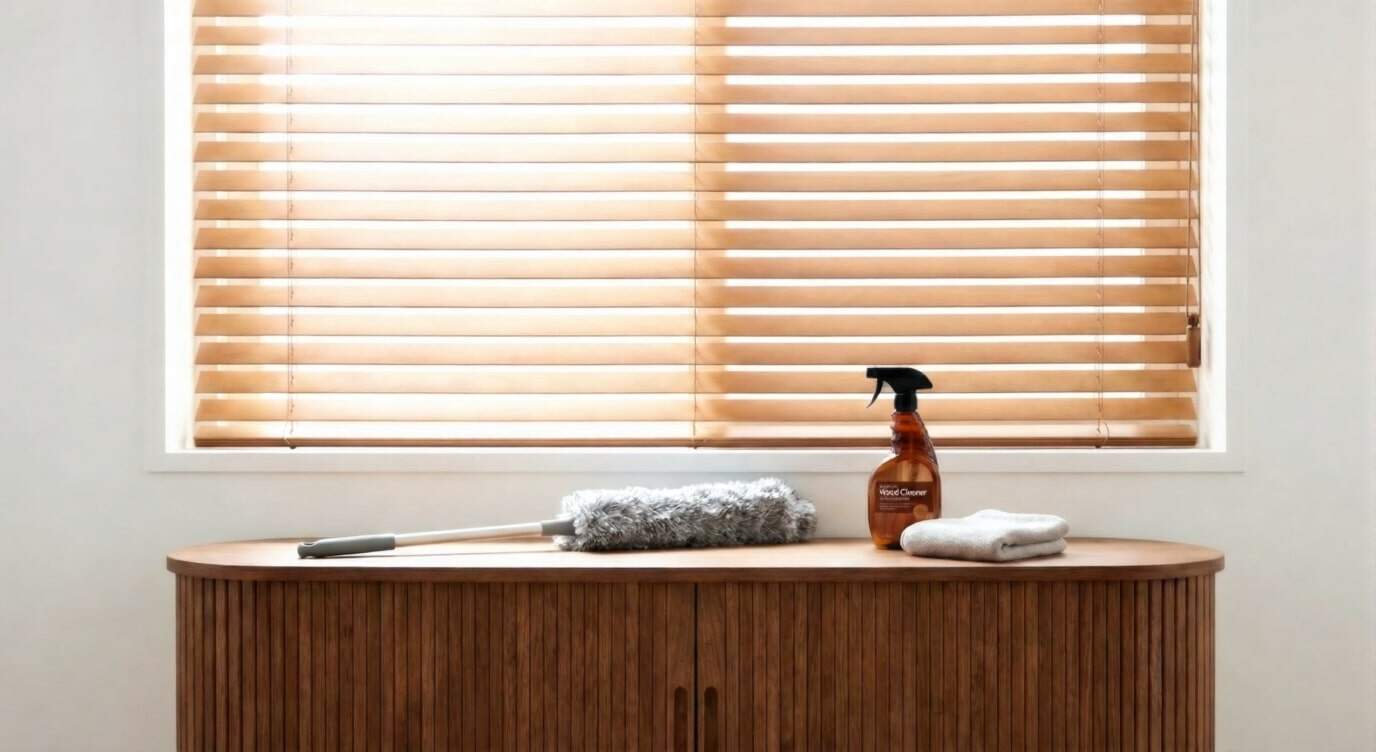
Real wood blinds require specific attention to maintain their finish and structural soundness. They can warp, crack, or fade if exposed to high humidity, direct sunlight, or extreme temperature shifts. Regular dusting with a soft cloth or a specialized duster helps keep them looking good. Avoid harsh cleaning agents or too much moisture. This careful approach helps extend the life of wooden window coverings.
Faux wood blinds, in contrast, offer simpler cleaning and greater resilience. Made from PVC or composite materials, they resist moisture well and are less likely to fade in sunny windows. A damp cloth or mild soap and water cleans them effectively, making them a practical choice for kitchens, bathrooms, or other high-traffic rooms. These options suit clients seeking minimal upkeep for their window treatments.
| Feature | Real Wood Blinds | Faux Wood Blinds |
|---|---|---|
| Material Composition | Natural wood (basswood, cedar) | PVC or composite materials |
| Weight | Lighter, suitable for larger windows | Heavier, may require extra support for wide windows |
| Moisture Resistance | Low, prone to warping or cracking | High, resistant to humidity and water |
| Sunlight Exposure | May fade or warp over time | Resistant to fading and UV damage |
| Cleaning & Maintenance | Dust regularly, avoid moisture. how to Safely clean fabric blinds helps. | Wipe with damp cloth or mild cleaner. battery wand repair for motorized options. |
| Dent & Scratch Resistance | Can dent or scratch, refinishing possible | More resistant to dents; scratches can be harder to conceal |
Cost Breakdown: Wood vs. Faux Wood Blinds
The cost difference between wood and faux wood blinds often guides purchasing decisions. Faux wood typically has a lower cost per square foot. This price variation stems from material composition: natural wood requires specific harvesting and processing, while synthetic materials allow for more economical manufacturing. Buyers frequently balance their budget against the desired look and how long the blinds will last.
Installation difficulty also impacts the final price, especially for large windows or custom shapes. DM Interiors advises on wood And Faux materials considering budget and specific room needs. The table below offers a general comparison of cost factors for both blind types.
| Factor | Wood Blinds | Faux Wood Blinds |
|---|---|---|
| Initial Cost | Higher, due to natural material sourcing and production. | More affordable; constructed from PVC or composite materials. |
| Durability in Humidity | Can warp or crack in high moisture settings, possibly requiring earlier replacement. | Resists moisture, making them fit for bathrooms and kitchens, which extends their life. Vinyl Shutters also perform well in humid areas. |
| Weight & Installation | Lighter, which simplifies installation and use for wider windows. | Heavier, possibly needing stronger mounting hardware and affecting ease of use for broad spans. |
| Maintenance Costs | Requires specific cleaning products and occasional refinishing. | Simple to clean with soap and water, reducing long-term upkeep expenses. Consider how to Safely clean them. |
Moisture Resistance: Which Blind Material Performs Best?
Faux wood materials offer superior performance over real wood when moisture is present. Natural wood can warp, crack, or grow mildew with consistent exposure to humidity or water. In contrast, faux wood blinds keep their shape and appearance in damp conditions. This resilience makes them suitable for areas in a home where humidity levels change often.
DM Interiors suggests faux wood options for bathrooms and kitchens, especially when homeowners want the look of wood without the risk of damage. This selection extends the life of your window treatments and helps maintain the room’s appearance. Assess a room’s typical humidity levels before making a material choice.
For spaces where real wood is preferred but moisture is a factor, good ventilation can reduce some risks. However, for the best durability and least maintenance in high-moisture environments, faux wood options provide a clear benefit over natural wood. You can also explore window treatments Extreme for more specialized protection.
| Room Type | Recommended Blind Material | Reasoning |
|---|---|---|
| Bathrooms | Faux Wood | High humidity and possible direct water splashes. Faux wood resists warping and mildew. |
| Kitchens | Faux Wood | Steam from cooking and cleaning can cause real wood to swell or crack over time. |
| Laundry Rooms | Faux Wood | Frequent steam and moisture from appliances. |
| Bedrooms | Real Wood or Faux Wood | Typically low humidity, allowing for either choice based on look. |
| Living Rooms | Real Wood or Faux Wood | Low moisture levels, offering flexibility for material choice. |
| Basements (Finished) | Faux Wood or Vinyl Shutters | Basements often have higher ambient humidity; faux wood resists moisture damage. |
Style and Aesthetics: Enhancing Your Home Decor
Selecting between real wood and faux wood blinds requires considering their look and practical benefits. Each material offers different performance qualities for various settings, influencing how long they last and how much care they need.
Eleanor wants new window coverings for her bathroom. She appreciates the natural appearance of real wood blinds but fears water damage. She asks if faux wood blinds can provide a similar style while proving more resilient in a humid bathroom.
Recommendation: Faux Wood Blinds
DM Interiors suggests faux wood blinds for Eleanor’s bathroom. These blinds resist moisture, preventing warping or fading in damp conditions. This option meets her desire for a stylish window treatment and the room’s practical needs.
Choosing DM Interiors for Your Perfect Blind Solution
Choosing appropriate window coverings requires balancing visual appeal with practical needs for every space. DM Interiors assists clients with this choice, making sure the selected blinds fit the interior design and fulfill specific functions.
We offer personalized recommendations, considering factors such as moisture exposure, light control, and overall room style. DM Interiors specializes in a range of window treatments, including high-quality wood and faux wood blinds that suit various budgets and design goals.
| Best for Situation | Recommended Blind Solution |
|---|---|
| High Humidity Areas (Bathrooms, Kitchens) | Faux Wood Blinds or Vinyl Shutters |
| Rooms Needing Authentic Wood Grain | Real Wood Blinds |
| Budget-Conscious Projects | Faux Wood Blinds |
| Large Windows (Weight Concern) | Real Wood Blinds or vertical blinds |
| Specific Design Aesthetics | Hunter Douglas or custom window treatments |
FAQ
Still weighing your options between wood vs faux wood blinds? This section addresses common questions to help you make an informed decision for your home.
| Question | Answer |
|---|---|
| When should I choose faux wood blinds over real wood blinds? | Faux wood blinds are a better choice for rooms with high humidity or direct moisture exposure, such as bathrooms and kitchens. They resist warping and cracking better than real wood in these conditions. Faux wood blinds also tend to be more budget-friendly. |
| Are real wood blinds suitable for large windows? | Real wood blinds are often a good choice for large windows because they are lighter than faux wood blinds. This lighter weight can make them easier to operate and put less stress on the window frame and mounting hardware. |
| How do I clean and maintain real wood blinds? | Real wood blinds require careful cleaning to prevent damage. You should dust them regularly with a soft cloth and avoid using harsh cleaning agents or excessive moisture. Exposure to high humidity or extreme temperature changes can cause them to warp or fade. |
| What are the main differences in appearance between wood and faux wood blinds? | Real wood blinds offer authentic grain patterns and a warmer, natural aesthetic. Faux wood blinds aim to mimic this look with a more uniform finish and consistent color, providing a wood-like texture. |